Wabi-Sabi · Living Room
Wabi-Sabi Living Room Ideas
A Wabi-Sabi living room finds calm in imperfection: earthy plaster walls, raw natural materials, low honest furniture, and a few worn, handmade objects given room to breathe. It is warm and quiet rather than polished, the kind of space that looks lived-in on purpose. Here is what actually defines the style, and how to see it on your own living room before you buy a thing.
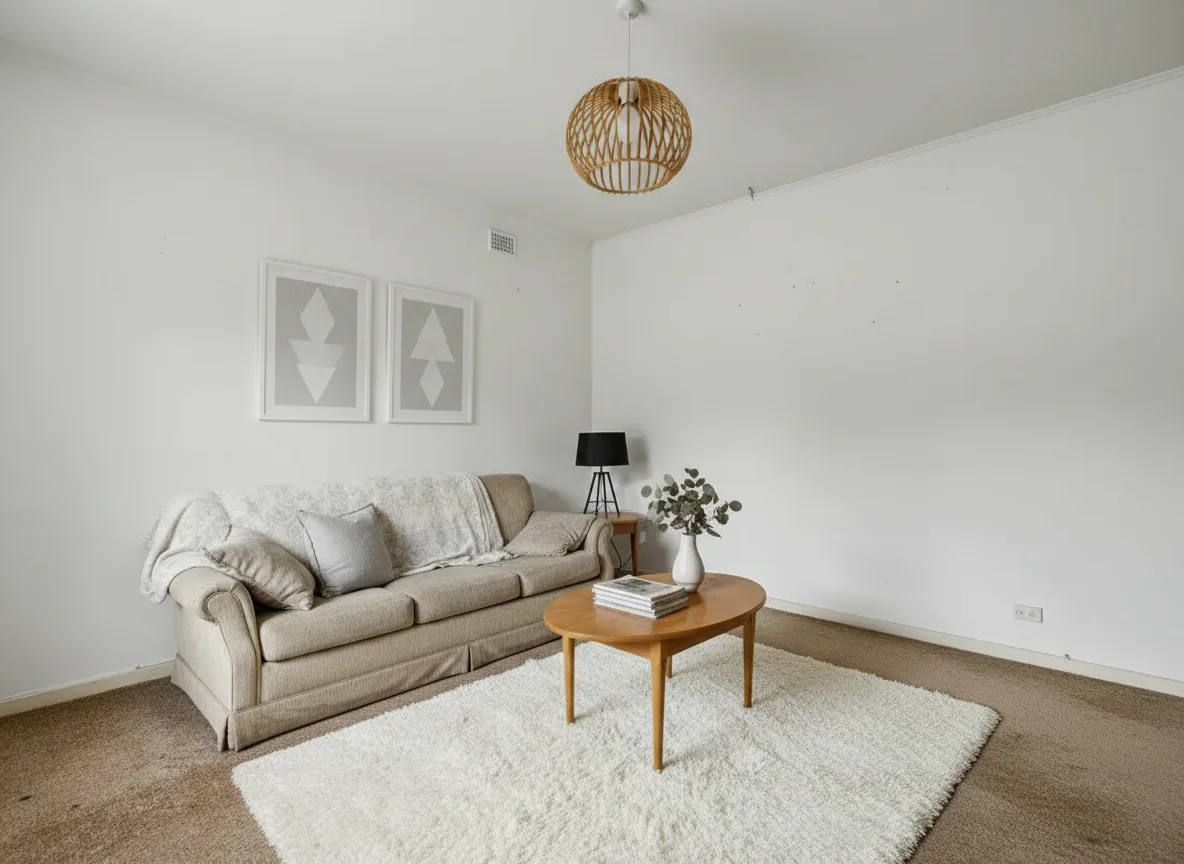
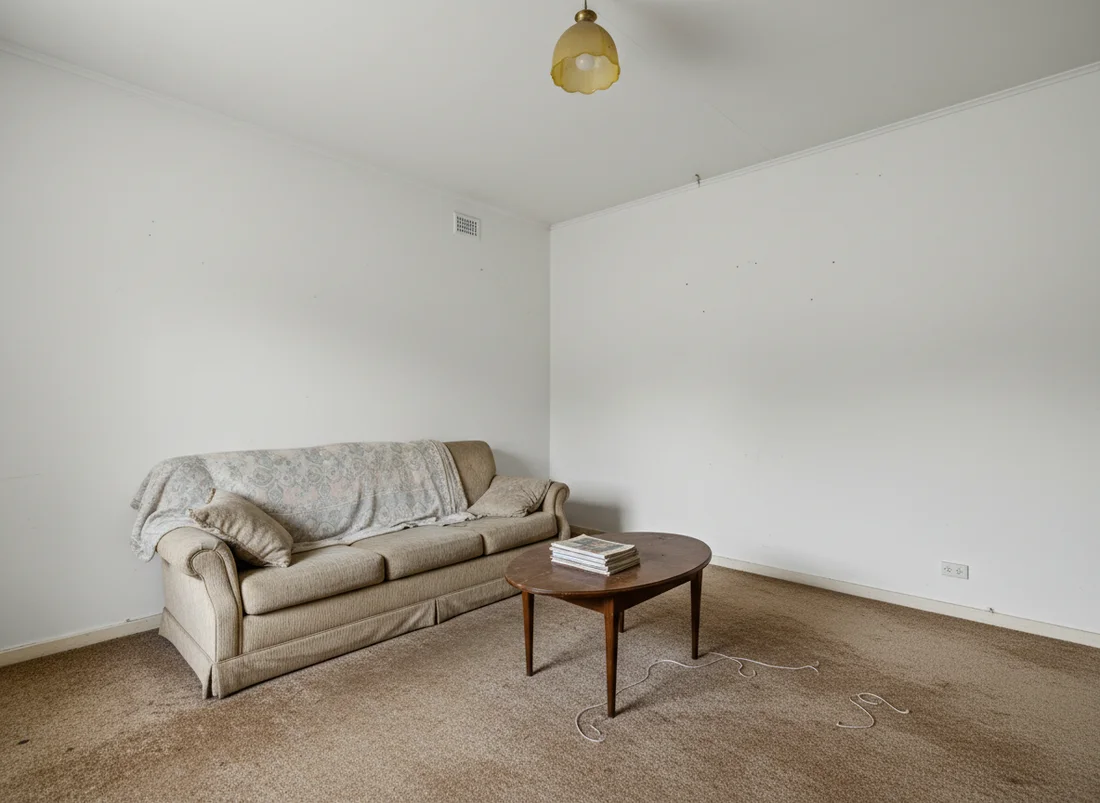 Before
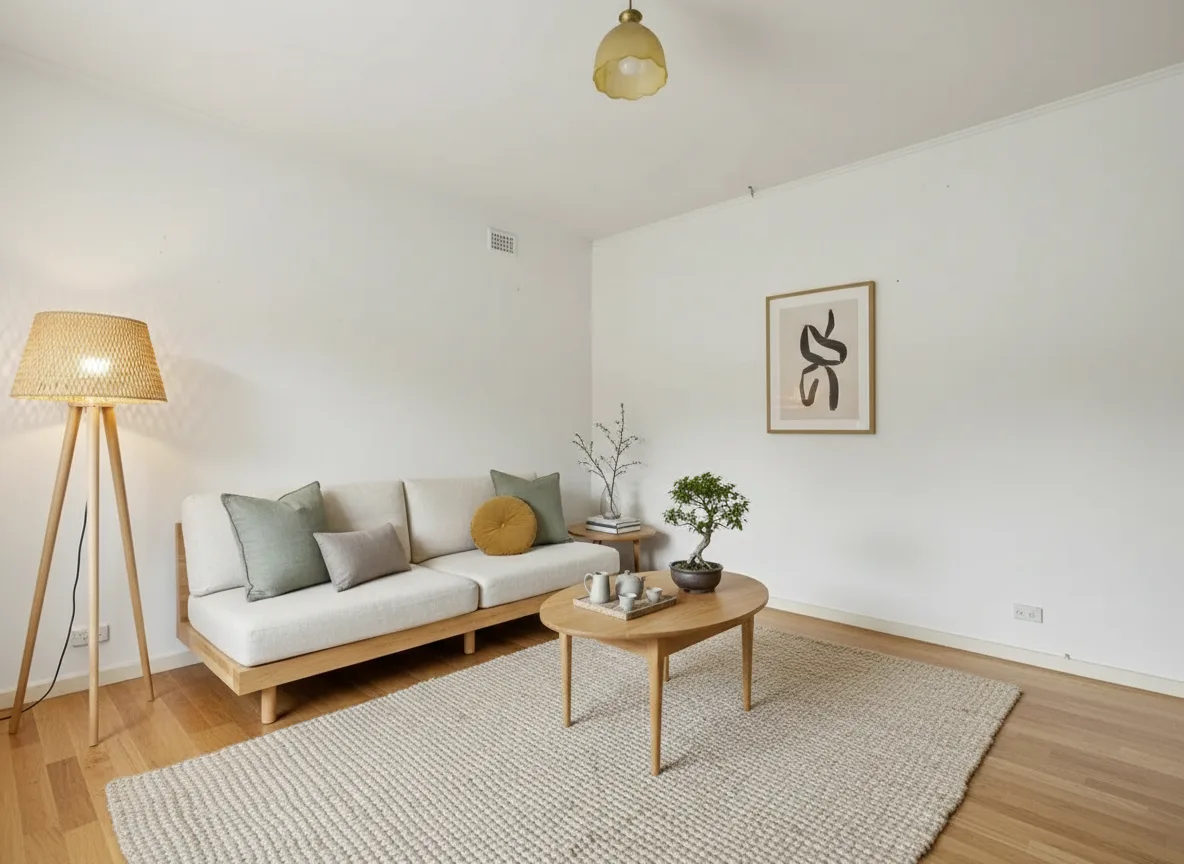
Wabi-Sabi
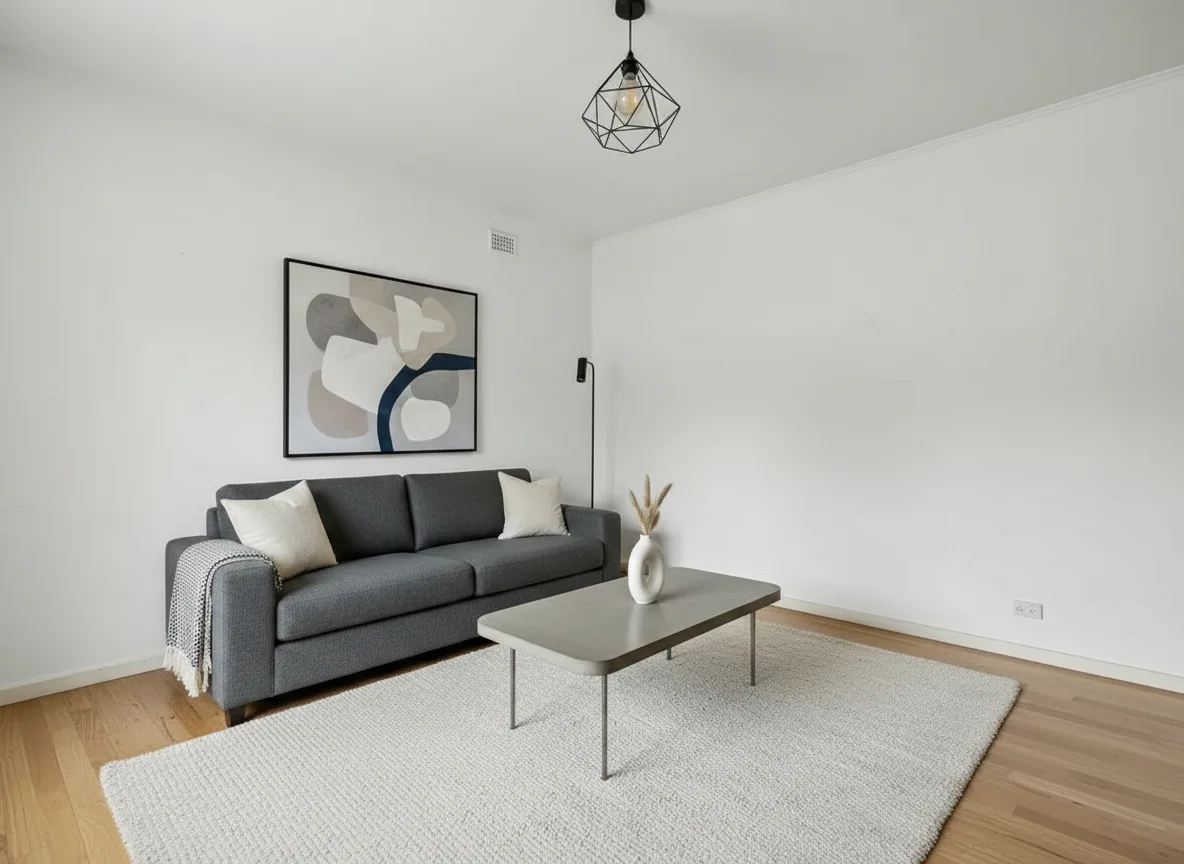
Before
Wabi-Sabi
What makes a living room Wabi-Sabi
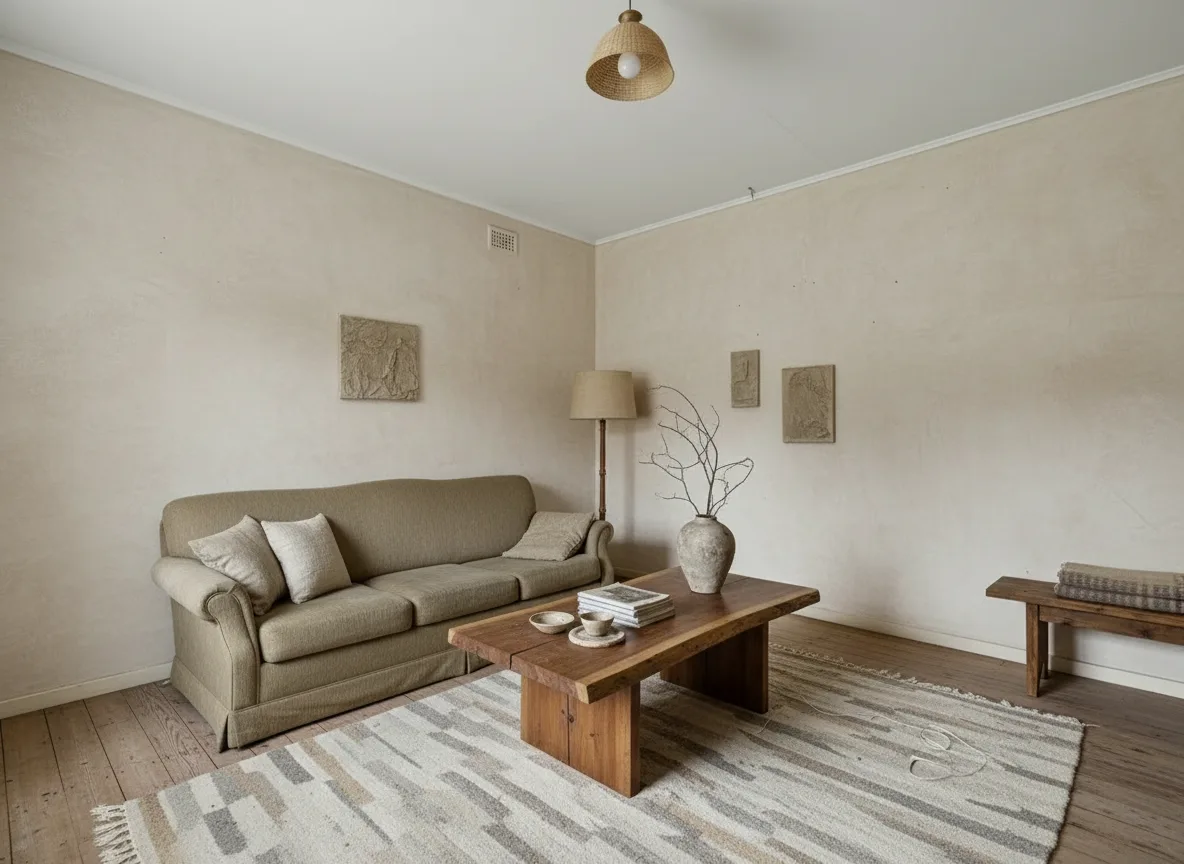
Wabi-Sabi finds beauty in imperfection and age. The palette is earthy and muted: clay, oatmeal, plaster white, warm greige and the grey-brown of unfinished wood. Walls read best in limewash or raw plaster with a slightly uneven, hand-troweled finish, and floors run in aged or reclaimed timber. Furniture sits low and solid, a chunky wooden coffee table, a linen slipcovered sofa in a natural undyed tone, a hand-thrown ceramic lamp. Nothing looks factory-perfect, and that is the point.
The signature move is texture that shows its making and its wear. Think coarse linen and raw cotton, a nubby wool throw, a jute or vintage rug with faded spots, and pottery with visible glaze drips or a chipped rim left as-is. Lighting stays low, warm and a little uneven, with a paper lantern, a soft table lamp, or candlelight rather than bright overheads. A single dried branch or a weathered bowl on an otherwise bare surface does more than a full shelf of decor.
How Wabi-Sabi differs from Japandi (and where people go wrong)
The most common mistake is confusing Wabi-Sabi with a tidier, more designed look. A japandi living room shares the muted palette and low furniture but is more resolved and precise, with cleaner lines and matched pieces. Wabi-Sabi is rougher and more human, and it welcomes the crack, the patina and the mismatched find. If your room looks styled to perfection, you have drifted toward Japandi and away from Wabi-Sabi.
The other trap is buying new things that pretend to be old, or over-decorating in the name of "organic". Wabi-Sabi rewards restraint and real age, so a genuinely worn stool or an inherited ceramic beats a distressed reproduction every time. In a small or awkward living room the style actually helps, because emptiness is part of it. Leave surfaces bare, keep the palette to two or three earthy tones, and let one or two textured, imperfect objects carry the room instead of filling every corner.
How to get the Wabi-Sabi look in your living room
- Start with an earthy, imperfect wall. Trade flat paint for limewash or raw plaster in clay, greige or plaster white so the surface has depth and a hand-finished feel.
- Choose low, solid, natural furniture. A chunky wooden table and a linen slipcovered sofa in undyed tones set the grounded, unpolished base.
- Layer raw, tactile textiles. Coarse linen, raw cotton and nubby wool in oat and stone add warmth while keeping the palette quiet.
- Add one imperfect, honest object. A hand-thrown bowl with a chipped rim or a single dried branch says more than a crowded shelf, and warm low lighting finishes the mood.
- See it on your real room first. Because Wabi-Sabi lives on restraint and real texture, upload a photo to restylai and apply it to your actual living room before you change a thing.
See your living room in Wabi-Sabi, free
Upload one photo and watch your real living room in Wabi-Sabi. Your walls, windows and layout stay exactly as they are.
Try it free, no signupOne photo. About ten seconds. Your room, your layout.