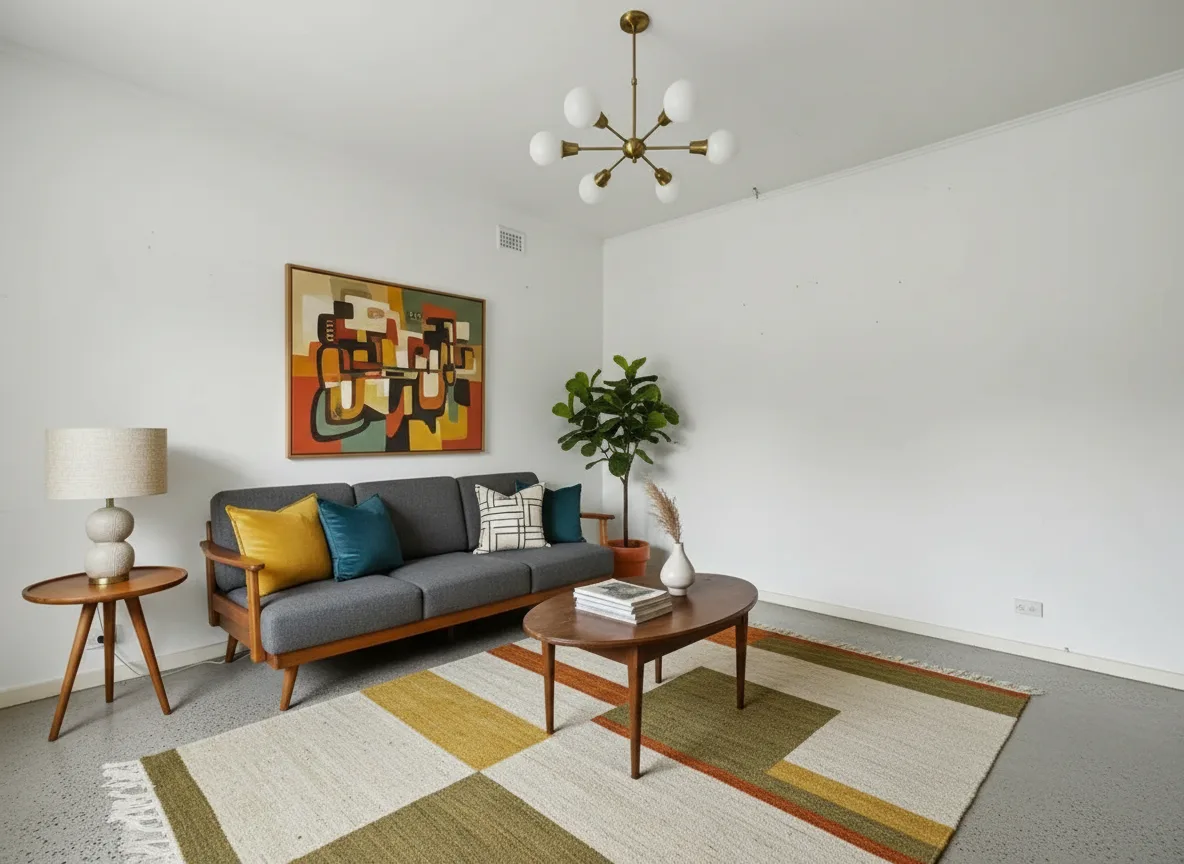
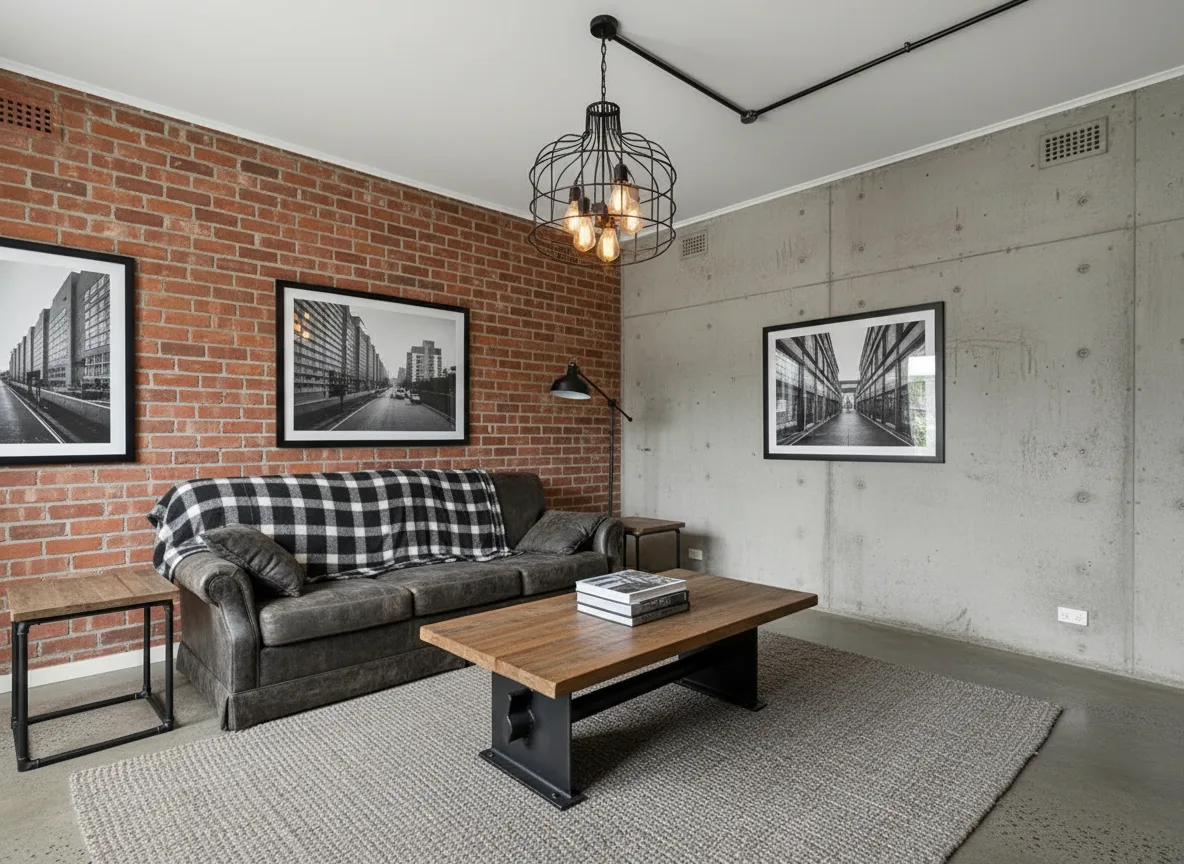
Japandi · Living Room
Japandi Living Room Ideas
Japandi blends Japanese quiet with Scandinavian ease, giving a living room warm woods, an earthy muted palette, and low furniture with plenty of breathing room around it. It is calm without feeling cold, and grounded without feeling heavy. Here is what actually defines the look, and how to see it on your own living room before you change a thing.
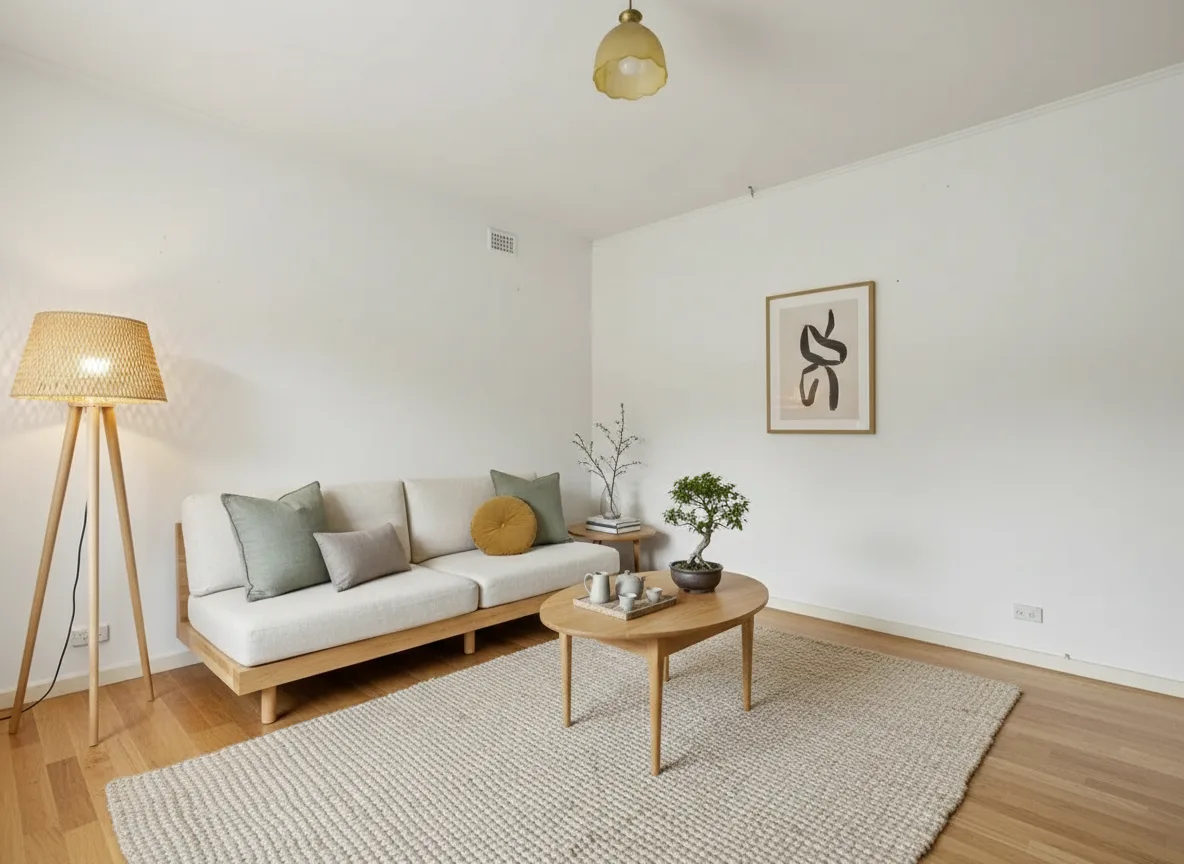
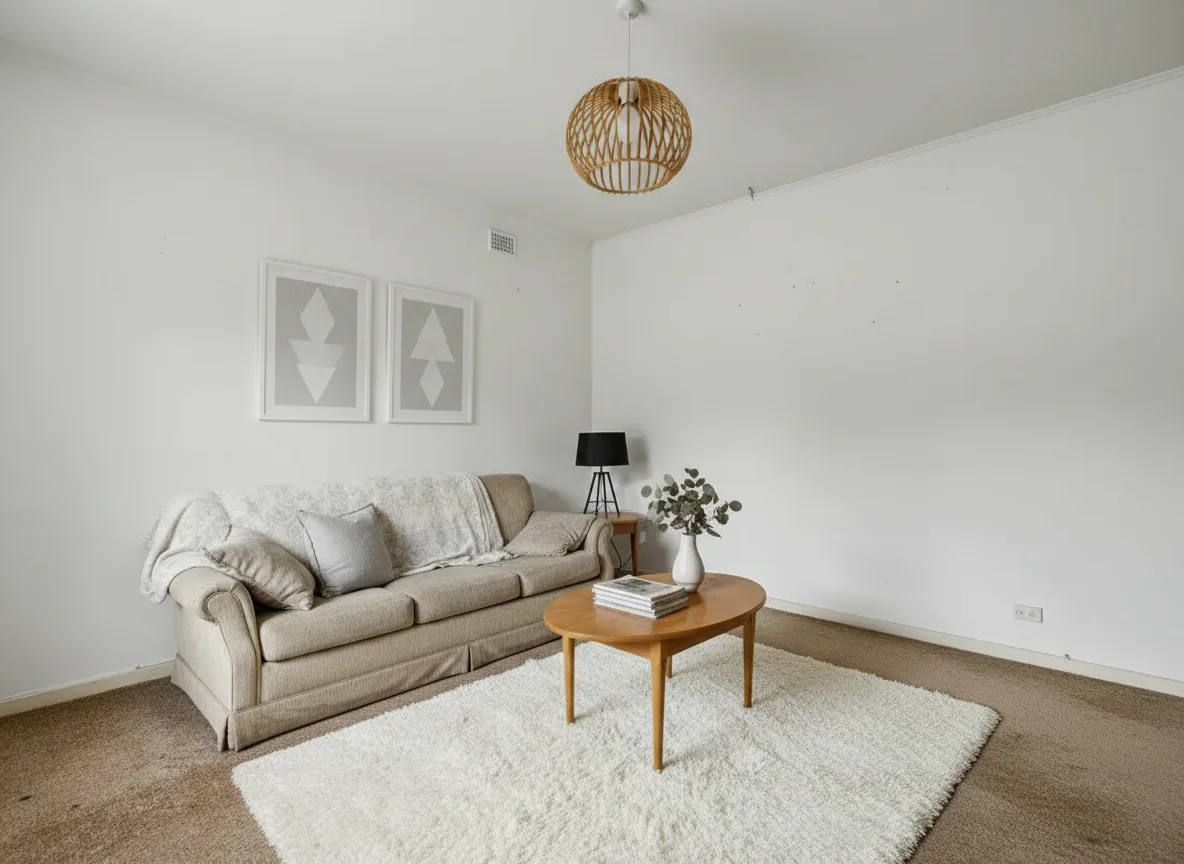
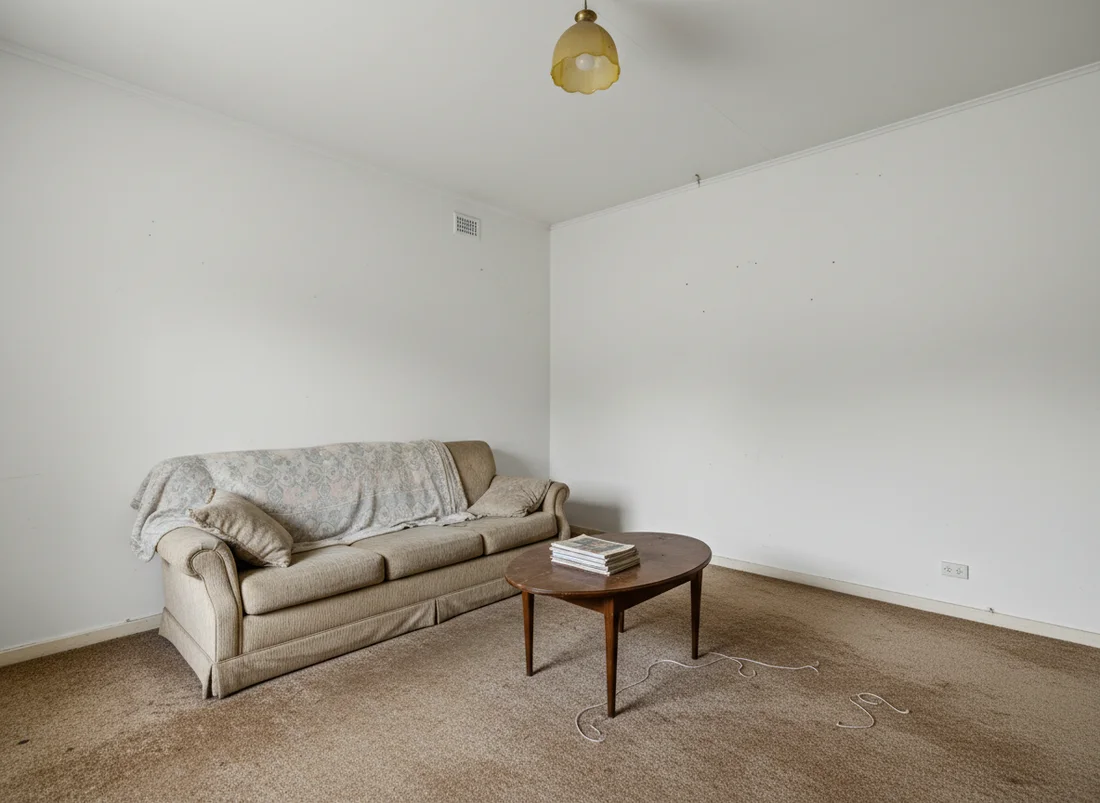 Before
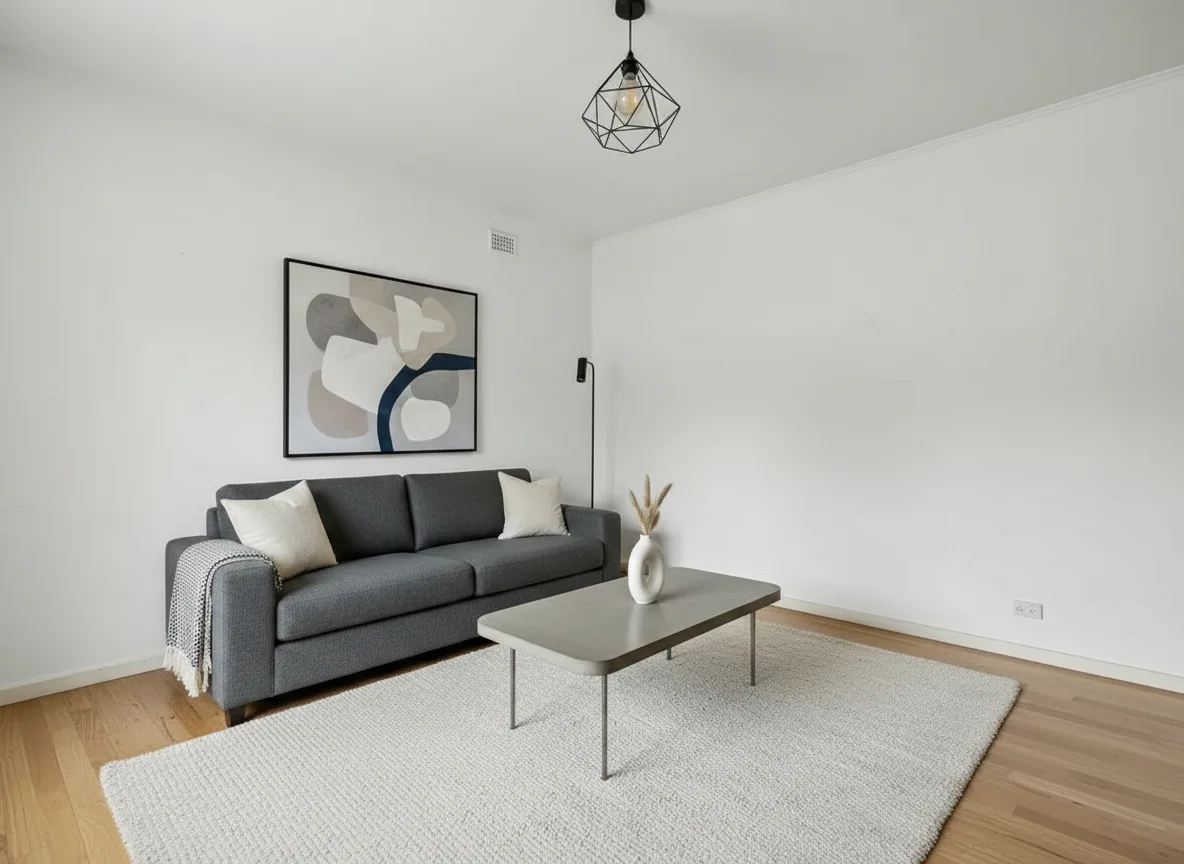
Japandi
Before
Japandi
What makes a living room Japandi
Japandi is the meeting of Japanese and Scandinavian rooms, so it keeps the pale calm of the north but grounds it with warmer, deeper wood and a lower center of gravity. The palette runs muted and earthy: oatmeal, warm greige, soft clay and charcoal, with walls left quiet so the materials carry the room. Wood tones lean richer than Scandinavian oak, think walnut, oak with a smoked finish, or ash, and they show up on a low sofa frame, a slim-legged coffee table, and open shelving.
The signature move is negative space used on purpose. Furniture sits low and a little sparse, so the floor and the wall breathe around each piece rather than filling every corner. Texture is honest and matte: linen and boucle upholstery, a chunky wool or jute rug, a paper or rattan pendant, unglazed ceramics and a single sculptural branch in a stoneware vase. Lighting stays warm and layered, low lamps and diffuse shades over one bright overhead, which is what gives Japandi its grounded, evening-calm feel.
Japandi versus its close cousins
It is easy to confuse Japandi with a bright Scandinavian room, but the two pull in different directions. Scandinavian chases lightness with white walls and leggy pale furniture, while Japandi wants weight and shadow: darker wood, lower pieces, more empty floor and a moodier, earthier palette. If you love the airy brightness more than the grounded stillness, compare it against a scandinavian living room before you commit, because the same photo can go either way depending on how warm and low you take it.
The common mistake is treating Japandi as an excuse to add more: too many plants, busy patterns, or glossy black accents that tip it toward generic modern. Restraint is the whole point, so subtract before you add and let a few well-made pieces sit in real space. In a small or awkward living room this actually works in your favor, since low furniture and a quiet palette make a tight room read as intentional and calm rather than cramped.
How to get the Japandi look in your living room
- Warm up the walls, not brighten them. Swap stark white for oatmeal, warm greige or soft clay so the wood and textiles set the mood instead of the paint.
- Go low and leave gaps. Choose a low sofa and slim tables, then resist filling the corners, because the empty floor is doing half the design work.
- Mix darker wood with matte texture. Pair walnut or smoked oak with linen, boucle, wool and unglazed ceramics, and keep everything flat rather than glossy.
- Light it warm and layered. Add low lamps and a paper or rattan pendant with a soft bulb so the room glows in the evening rather than washing out.
- See it on your real room first. Because Japandi lives on restraint and the right wood tone, upload a photo to restylai and apply Japandi to your actual living room before you buy or repaint a thing.
See your living room in Japandi, free
Upload one photo and watch your real living room in Japandi. Your walls, windows and layout stay exactly as they are.
Try it free, no signupOne photo. About ten seconds. Your room, your layout.