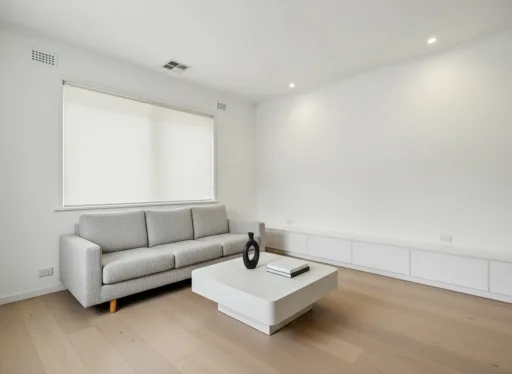
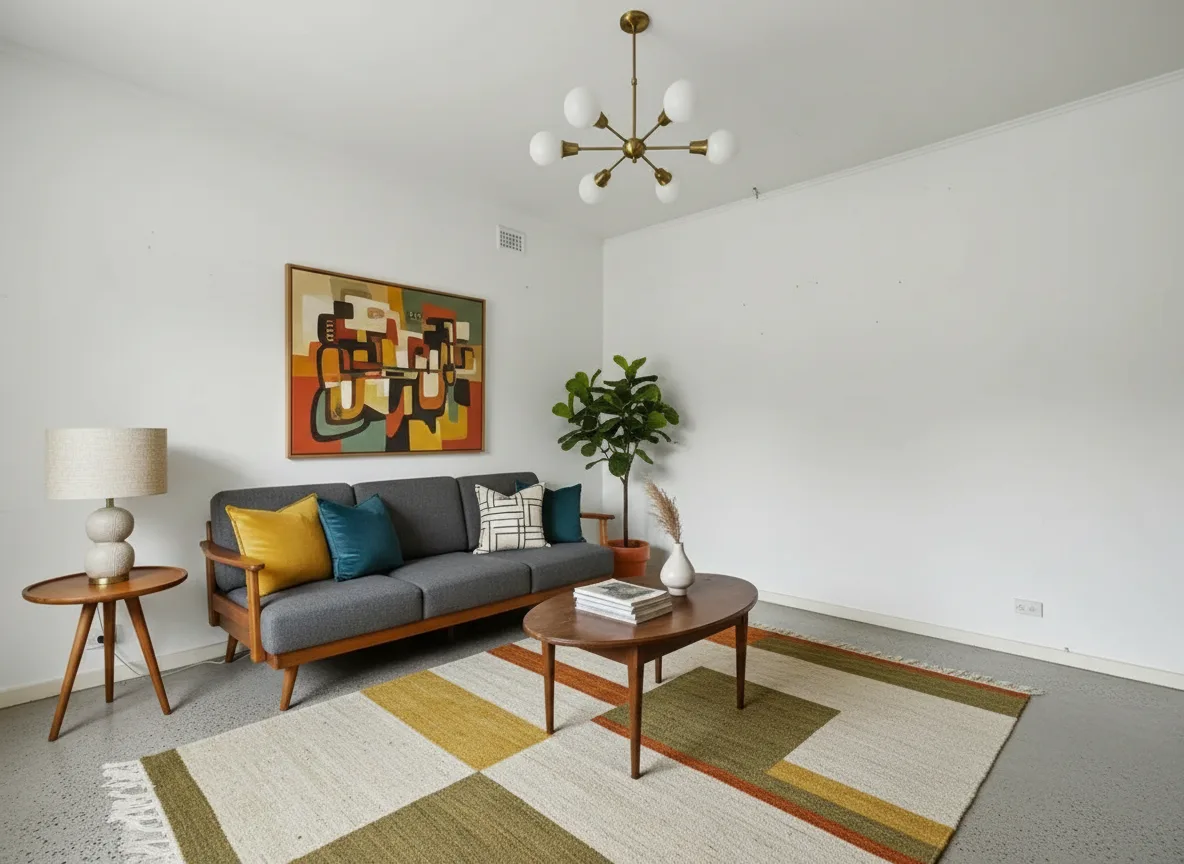
Transitional · Living Room
Transitional Living Room Ideas
Transitional is the middle ground between traditional comfort and clean contemporary lines. It keeps the shapes soft and the palette warm and neutral, then strips away the fuss, so a rolled-arm sofa sits happily next to a simple linen chair and nothing feels fussy or cold. Here is what actually defines the look in a living room, and how to see it on your own space before you move a thing.
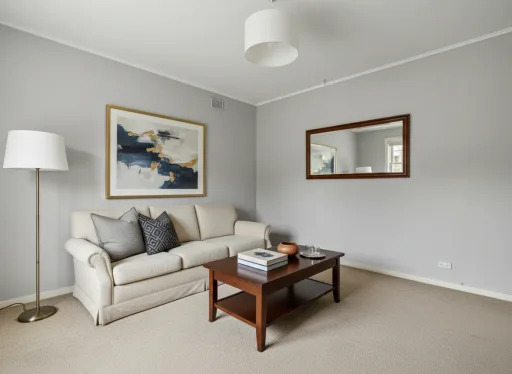
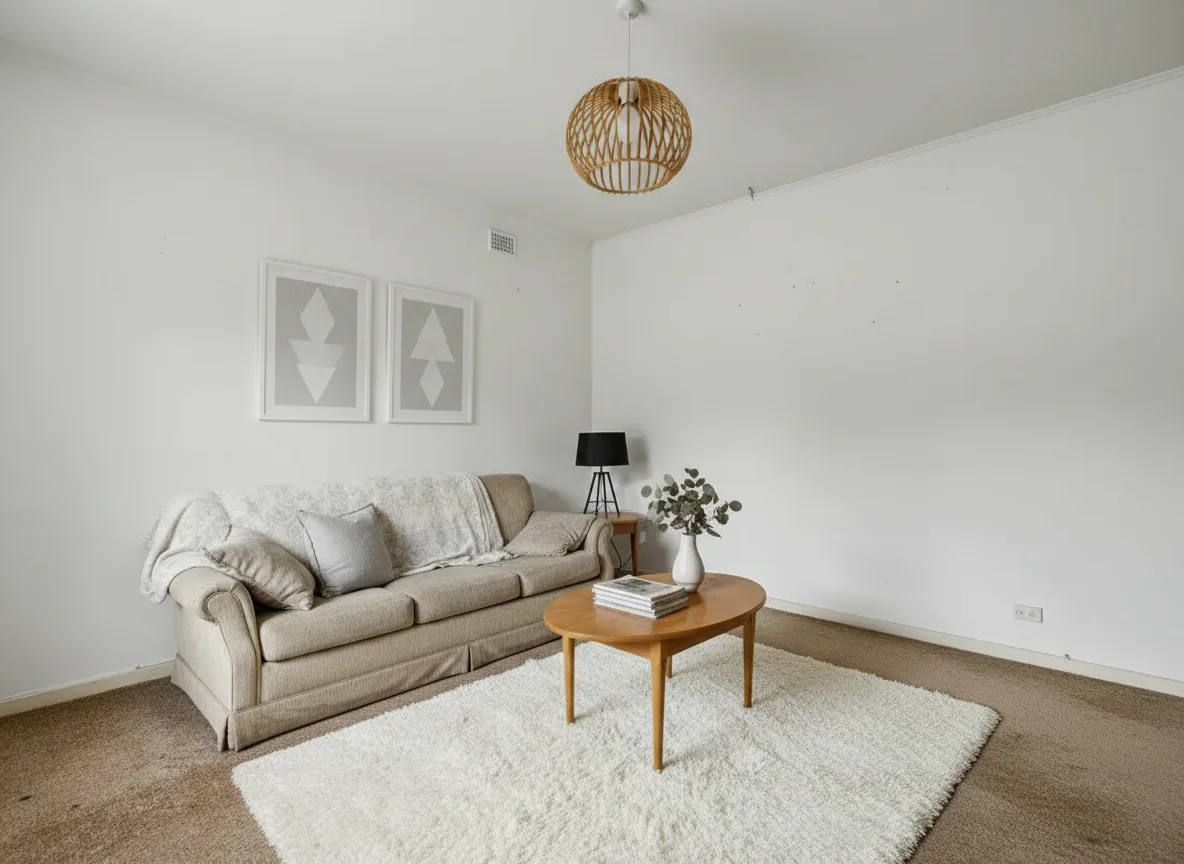
 Before
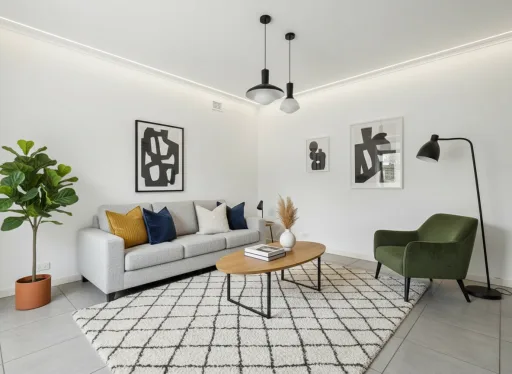
Transitional
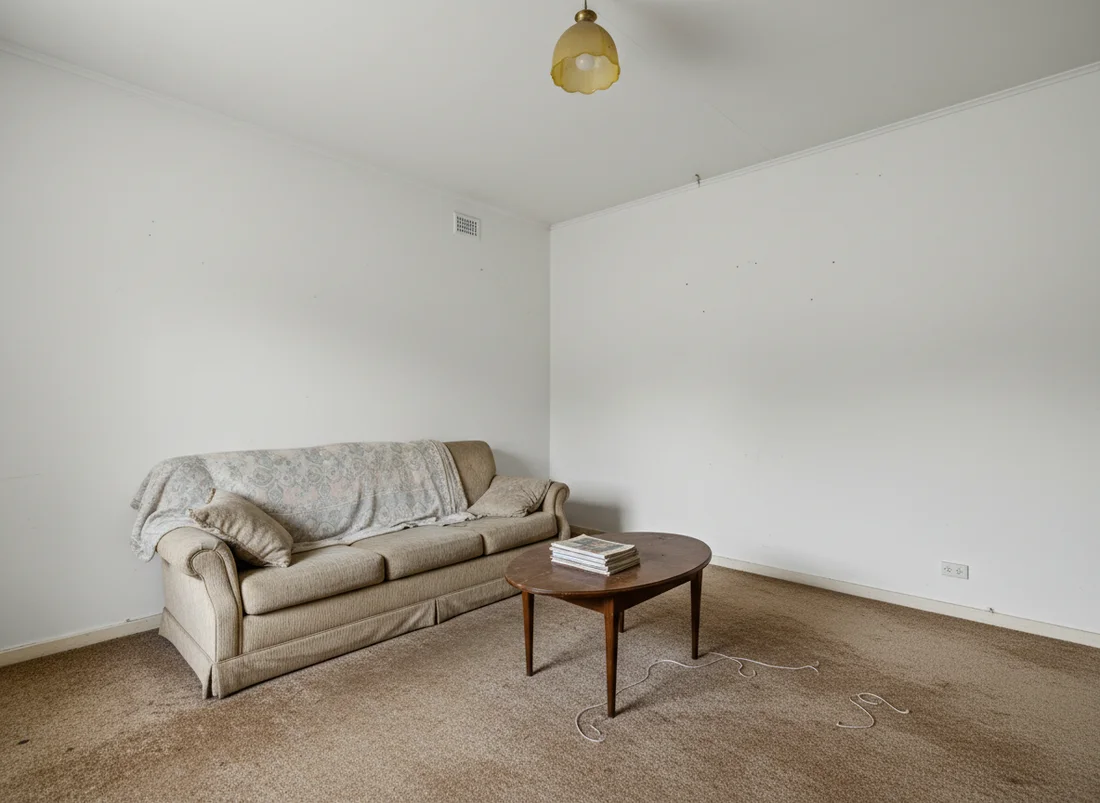
Before
Transitional
What makes a living room Transitional
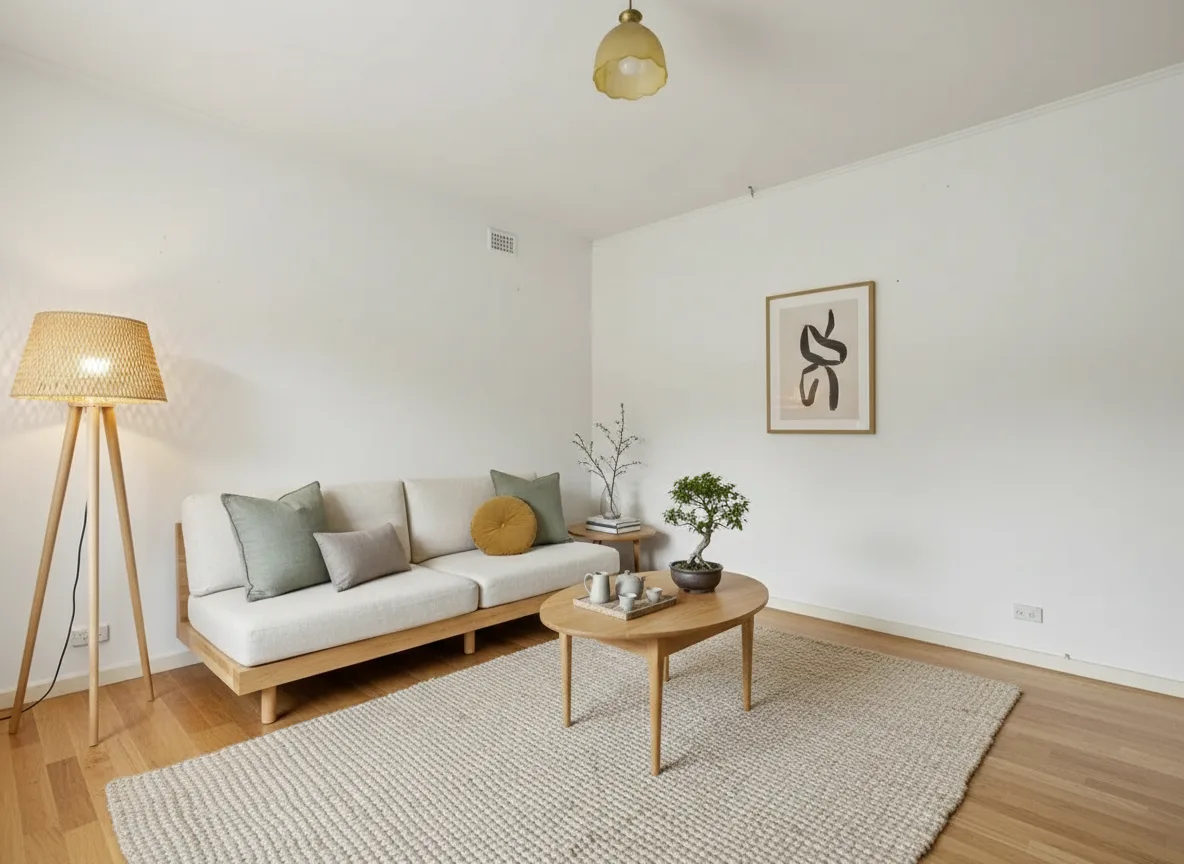
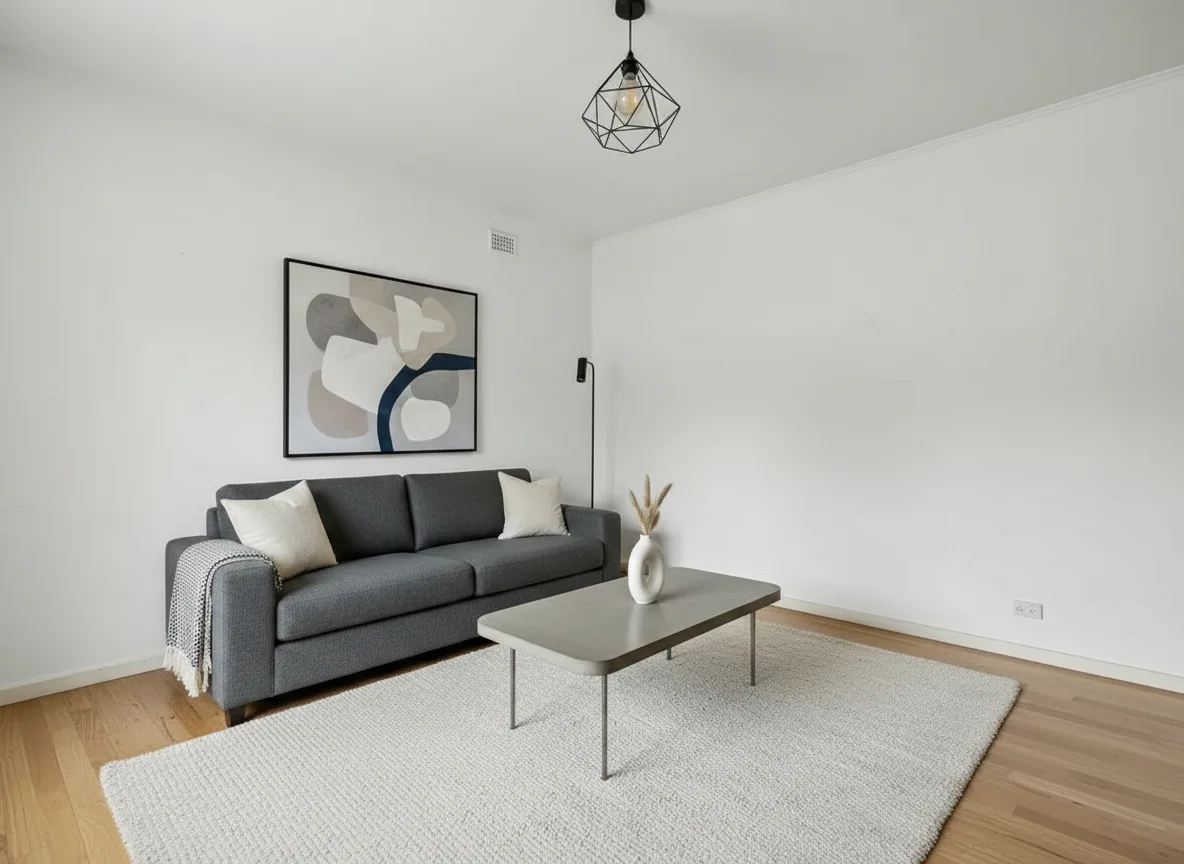
The palette is the anchor: warm neutrals like greige, taupe, soft white and mushroom on the walls, with deeper browns, charcoal or a single muted blue for grounding. Materials mix on purpose. A linen or performance-weave sofa, a wood coffee table with a slightly turned or tapered leg, a woven natural-fiber rug, and one metal or glass piece to keep it from reading heavy. Nothing is ornate and nothing is stark. The shapes are simple but still soft-edged.
The signature move is balance through contrast. Transitional pairs a curved, comfortable seat with a clean-lined case piece, or a classic wingback beside a streamlined sofa, so the room feels collected rather than matched. Lighting stays understated: a simple drum-shade floor lamp, recessed cans, maybe one sculptural table lamp instead of a chandelier. Accessories are few and tonal, a stack of books, a ceramic vase, a framed piece with a generous mat, all in the same quiet color family.
Transitional versus traditional, and where people slip
The easiest way to place Transitional is against its parent. A traditional living room leans into pattern, carved wood, tufting, symmetry and richer color, while Transitional keeps the comfortable bones but calms everything down to neutrals and cleaner silhouettes. It is not as bare or architectural as a fully contemporary room either. If your space currently feels either too formal or too plain, Transitional is often the setting that splits the difference.
The common mistake is going too matchy or too beige. Buying a full suite in one finish flattens the look, and leaning only on greige with no contrast leaves the room lifeless. Fix both by introducing one deeper tone and one different material: a charcoal chair, a walnut side table, a black metal lamp. In a small or awkward living room, keep the sofa low and the legs visible, choose one wood tone and one metal and stop there, and let the wall color carry the warmth so the floor stays uncluttered.
How to get the Transitional look in your living room
- Set a warm neutral base. Paint the walls greige, taupe or soft white so the room reads calm before any furniture goes in.
- Pair soft shapes with clean lines. Put a curved, comfortable sofa next to a simple wood or metal case piece so the room feels collected, not matched.
- Add one deeper tone. A charcoal chair, walnut table or muted-blue cushion keeps the neutral palette from going flat.
- Keep lighting and accessories quiet. A drum-shade lamp, a few tonal books and one ceramic vase finish it without clutter.
- See it on your real room first. Because Transitional lives in the balance, upload a photo to restylai and apply the Transitional style to your actual living room before you buy anything.
See your living room in Transitional, free
Upload one photo and watch your real living room in Transitional. Your walls, windows and layout stay exactly as they are.
Try it free, no signupOne photo. About ten seconds. Your room, your layout.