Rustic · Kitchen
Rustic Kitchen Ideas
A rustic kitchen is built from materials that look better with wear: rough-sawn timber, unlacquered brass, stone that shows its grain. The palette runs warm and earthy, and nothing pretends to be new. Here is what actually makes a kitchen read as rustic, and how to preview the look on a photo of your own kitchen before you commit to anything.
What makes a kitchen rustic
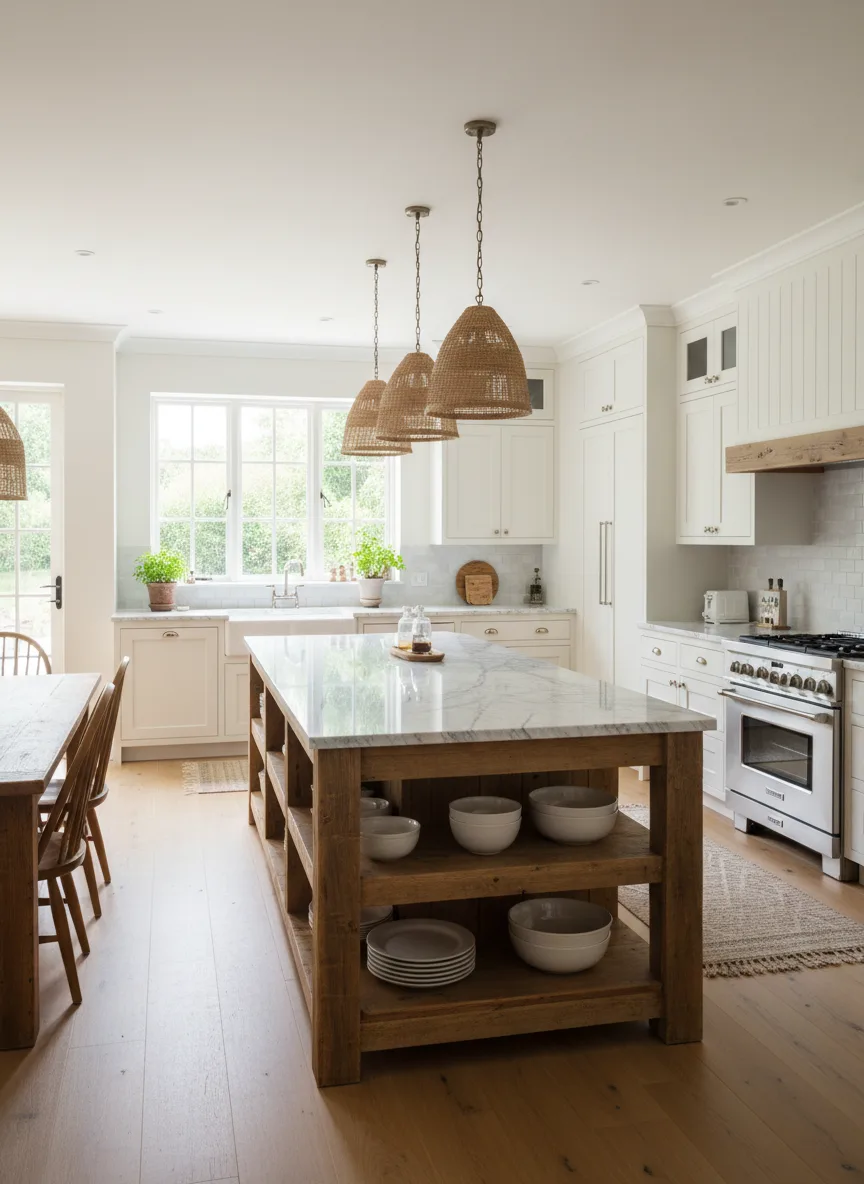
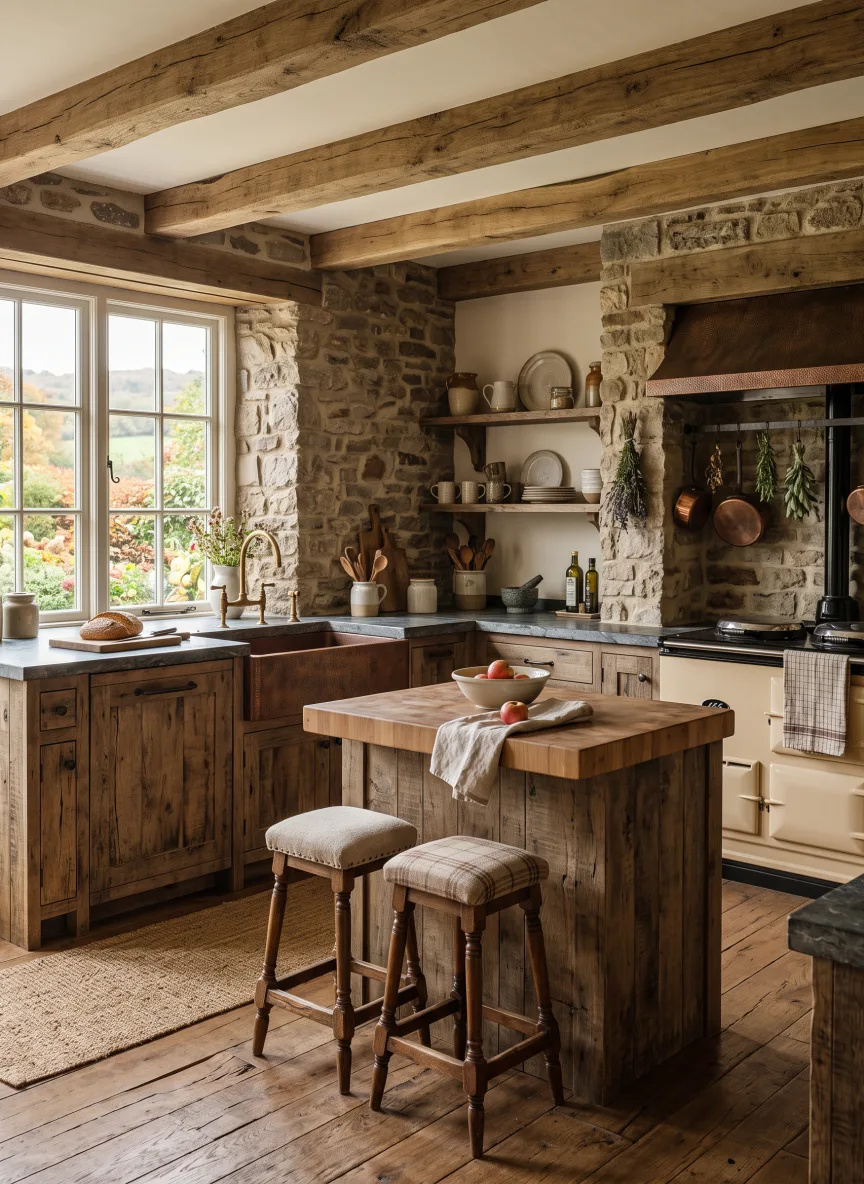
Wood carries the room, and it is the heavy, honest kind: chunky butcher-block or reclaimed-plank counters, open shelves cut from thick slabs, exposed ceiling beams if the architecture allows. Cabinets are simple shaker or plank fronts in knotty pine, oak or a milk-paint green or cream, never high-gloss. The palette stays in earth tones, warm browns, clay, olive and off-white, with black iron as the accent instead of chrome.
The signature moves are texture and visible age. A farmhouse-style apron sink in fireclay or hammered copper, a stone or brick backsplash laid a little irregularly, and iron or aged-brass hardware do most of the work. Lighting follows the same logic: lantern pendants, a wrought-iron fixture over the table, warm bulbs rather than cool white. Open shelving stacked with stoneware and copper pots replaces upper cabinets on at least one wall, so the everyday objects become part of the decor.
Rustic versus farmhouse, and where people overdo it
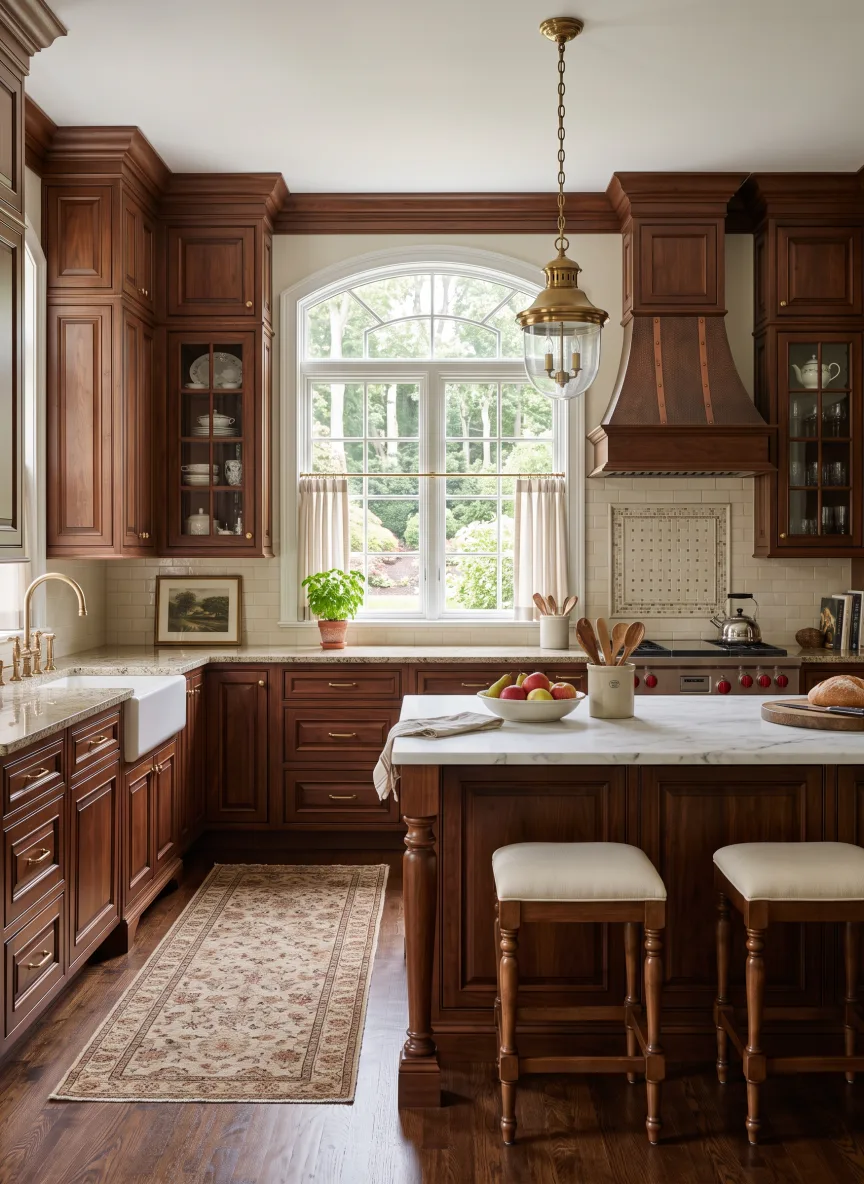
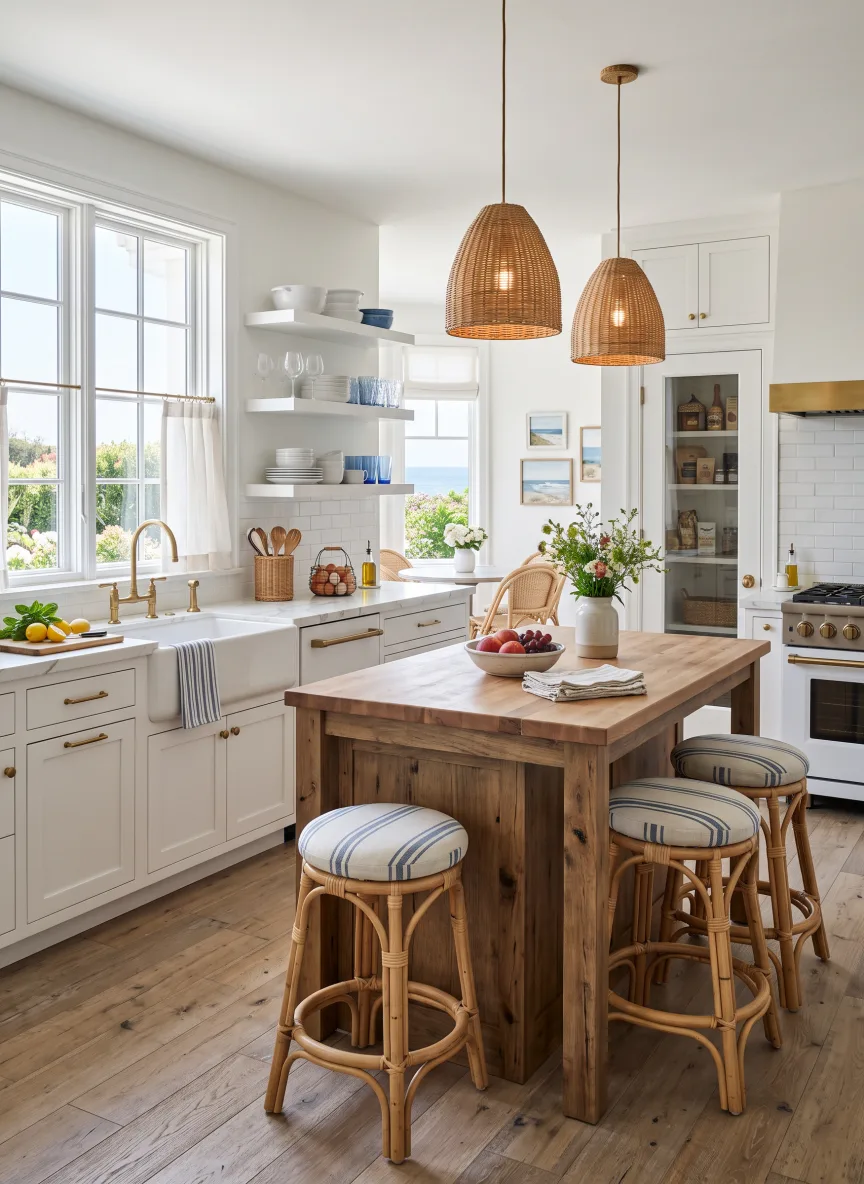
Rustic and farmhouse get used interchangeably, but they split on polish. A farmhouse kitchen is tidier and brighter, with painted white cabinets, a scrubbed feel and a bit of charm-store decor. Rustic is rawer: more exposed wood grain, darker and moodier tones, and materials left closer to their natural state. If you love the apron sink but want crisp white cabinets, you are leaning farmhouse. If you want the beams, the stone and the patina, that is rustic.
The common mistake is buying the distressing instead of the material. Factory-faux weathered signs and artificially scraped finishes read as costume, while one genuinely old or natural element, a real wood counter, a stone sill, an iron rail for utensils, reads as the real thing. The second mistake is going dark on every surface at once. Keep the walls light plaster or warm white so the timber and iron have contrast, especially in a small kitchen where all-brown quickly turns into a cabin cave.
How to get the Rustic look in your kitchen
- Lead with real wood. One substantial timber element, a butcher-block counter, thick open shelves or exposed beams, anchors the whole look better than a dozen small accents.
- Swap the metals to iron and aged brass. Black iron pulls, an aged-brass bridge faucet and lantern-style pendants replace chrome and instantly warm the room.
- Choose matte, earthy surfaces. Milk-paint cabinet colors, a brick or rough stone backsplash and warm white walls keep the palette grounded without going gloomy.
- Put daily objects on display. Stoneware, copper pots and wooden boards on open shelving are the rustic version of decor, so edit them down to the pieces you actually use.
- Try it on your real kitchen first. Rustic depends on how the wood and iron sit against your actual light and layout, so upload a photo to restylai and see the style applied to your own kitchen before buying a single plank.
See your kitchen in Rustic, free
Upload one photo and watch your real kitchen in Rustic. Your walls, windows and layout stay exactly as they are.
Try it free, no signupOne photo. About ten seconds. Your room, your layout.