Industrial · Kitchen
Industrial Kitchen Ideas
Industrial kitchens take their cues from converted factories and lofts: exposed brick, concrete, raw metal and dark cabinets, with the pipes and beams left on show instead of boxed in. It reads rugged and honest, warmed just enough with wood and leather so it still feels like a place to cook. Here is what actually defines the look, and how to see it on your own kitchen before you change a thing.
What makes a kitchen industrial
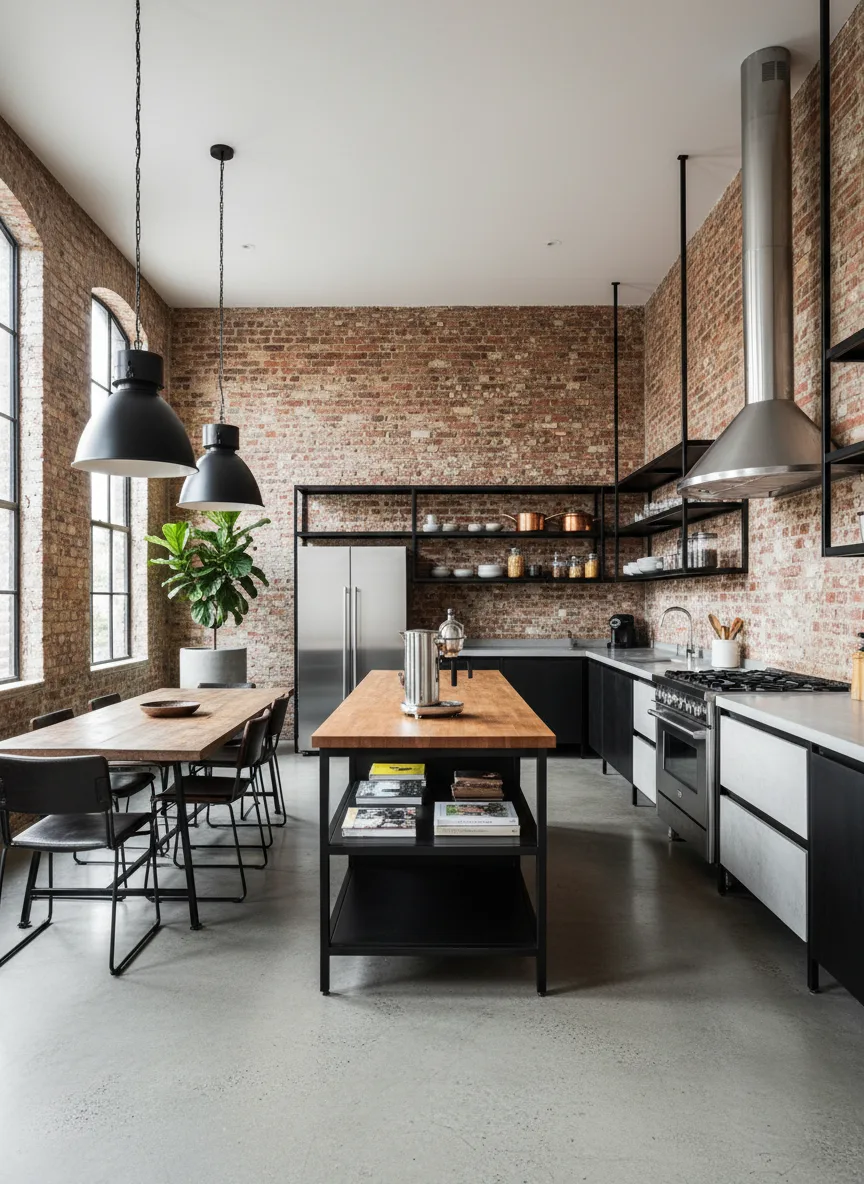
Industrial kitchens borrow from old factories and warehouses, so the palette is grey, black and raw brown: exposed brick, poured or polished concrete, and steel. Cabinets run flat and dark or disappear entirely in favor of open metal shelving, and the countertop leans toward concrete, dark stone or a stainless steel worktop that looks like it belongs in a commercial kitchen. The hardware is honest and mechanical, matte black taps, iron handles and visible bolts rather than anything soft or glossy.
The signature move is showing the structure instead of hiding it. Ductwork, pipes and beams stay exposed overhead, and the lighting is deliberately utilitarian: caged filament bulbs, black pendant domes over the island, or a length of track. One brick or concrete wall left bare, a stainless splashback, and a couple of worn-metal barstools at the counter are usually enough to tip a plain kitchen fully into industrial territory.
Industrial versus modern, and the mistakes to avoid
The line people blur most is between industrial and modern. A modern kitchen shares the dark tones and clean geometry but hides everything behind flush handleless doors and smooth engineered surfaces, where industrial deliberately leaves the pipes, brick and raw metal on display. If you like the moody palette but want the room to feel polished rather than stripped-back, modern is the softer cousin worth comparing before you commit.
The common mistake is going all-grey and all-metal until the room feels cold and hard, like a parking garage. Industrial needs one warm counterweight to read as a home: a butcher-block section of worktop, a reclaimed-wood shelf, a few leather stools or a single warm bulb temperature. In a small or low-ceilinged kitchen, skip the heavy exposed ductwork and get the look through finishes instead, a concrete-effect splashback, black taps and open shelving carry the style without eating the headroom.
How to get the Industrial look in your kitchen
- Start with a raw surface. One wall of exposed brick or a concrete-effect finish sets the industrial base before anything else goes in.
- Go dark and metal on the cabinets. Flat matte-black or deep grey fronts with iron handles, or swap upper cabinets for open steel shelving.
- Hang utilitarian lighting. Caged filament bulbs, black dome pendants over the island or exposed track keep the fixtures honest and mechanical.
- Add one warm counterweight. A butcher-block worktop, reclaimed-wood shelf or leather stools stop the grey and steel from reading cold.
- See it on your real kitchen first. Because industrial lives on the right balance of raw and warm, upload a photo to restylai and apply the industrial look to your actual kitchen before you buy a thing.
See your kitchen in Industrial, free
Upload one photo and watch your real kitchen in Industrial. Your walls, windows and layout stay exactly as they are.
Try it free, no signupOne photo. About ten seconds. Your room, your layout.