Mediterranean · Kitchen
Mediterranean Kitchen Ideas
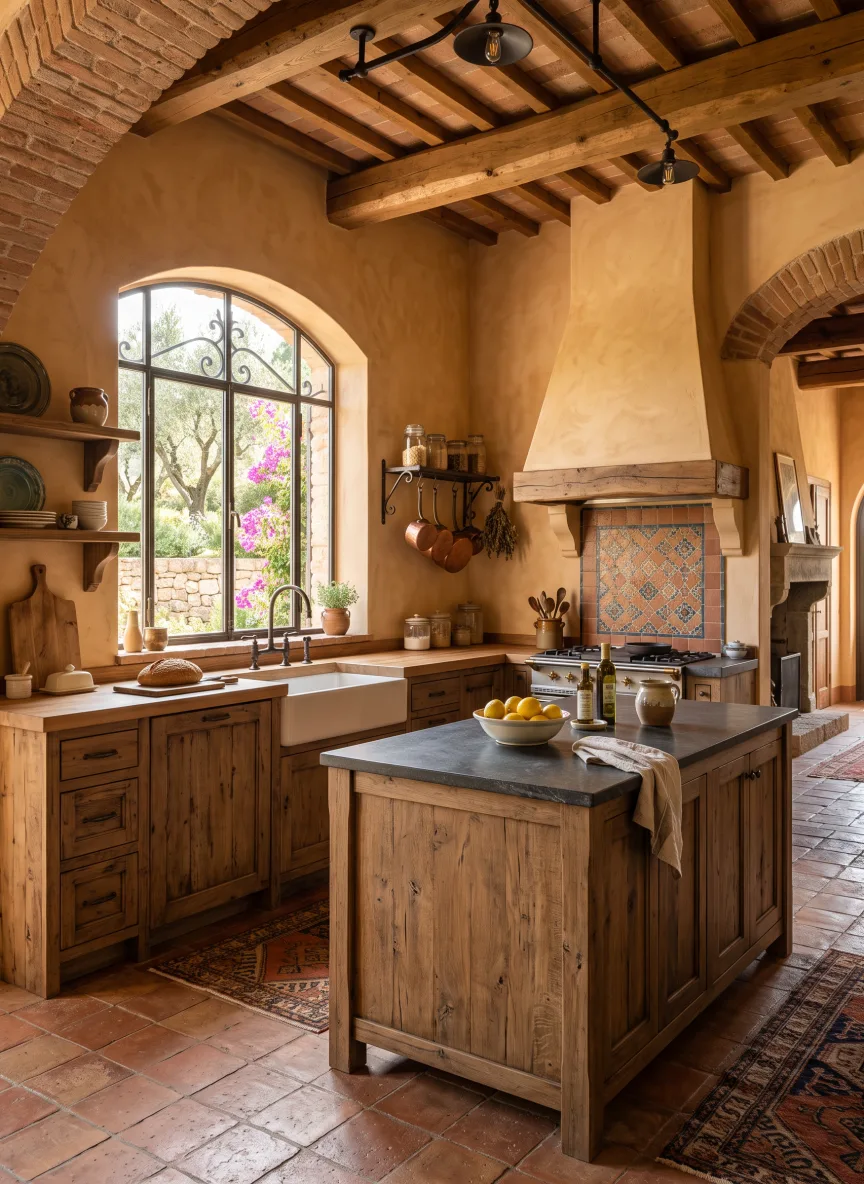
A Mediterranean kitchen is built around sun-baked warmth: white plaster or lime-washed walls, terracotta underfoot, and hand-glazed tile doing the decorating. It borrows from coastal Spain, Greece and southern Italy, where kitchens are working rooms that still look beautiful at midday. Here is what actually defines the style, and how to preview it on a photo of your own kitchen before you commit to a single tile.
What makes a kitchen Mediterranean
Start with the surfaces. Walls are white or warm off-white with a slightly irregular, plastered texture, never flat builder's paint. Floors run terracotta, either real quarry tile or a warm-toned porcelain, and the backsplash is where the color lives: hand-painted zellige or azulejo-style tile in cobalt, sea green or ochre, often laid only behind the range so it reads as a focal point rather than wallpaper. Cabinetry is simple and solid, painted olive, deep blue or left as honeyed wood, with open shelving holding glazed ceramics instead of a wall of upper cabinets.
The signature moves are the arch and the hood. A curved doorway, an arched alcove over the stove, or an arched niche of open shelving instantly says Mediterranean, and a plastered or stucco range hood finished to match the walls anchors the whole room. From there it is aged brass or black iron hardware, a chunky wood or stone worktop, a woven pendant shade or small iron lantern for light, and something alive on the counter: a pot of basil, a bowl of lemons, a trailing plant on the shelf.
Mediterranean versus farmhouse, and where people go wrong
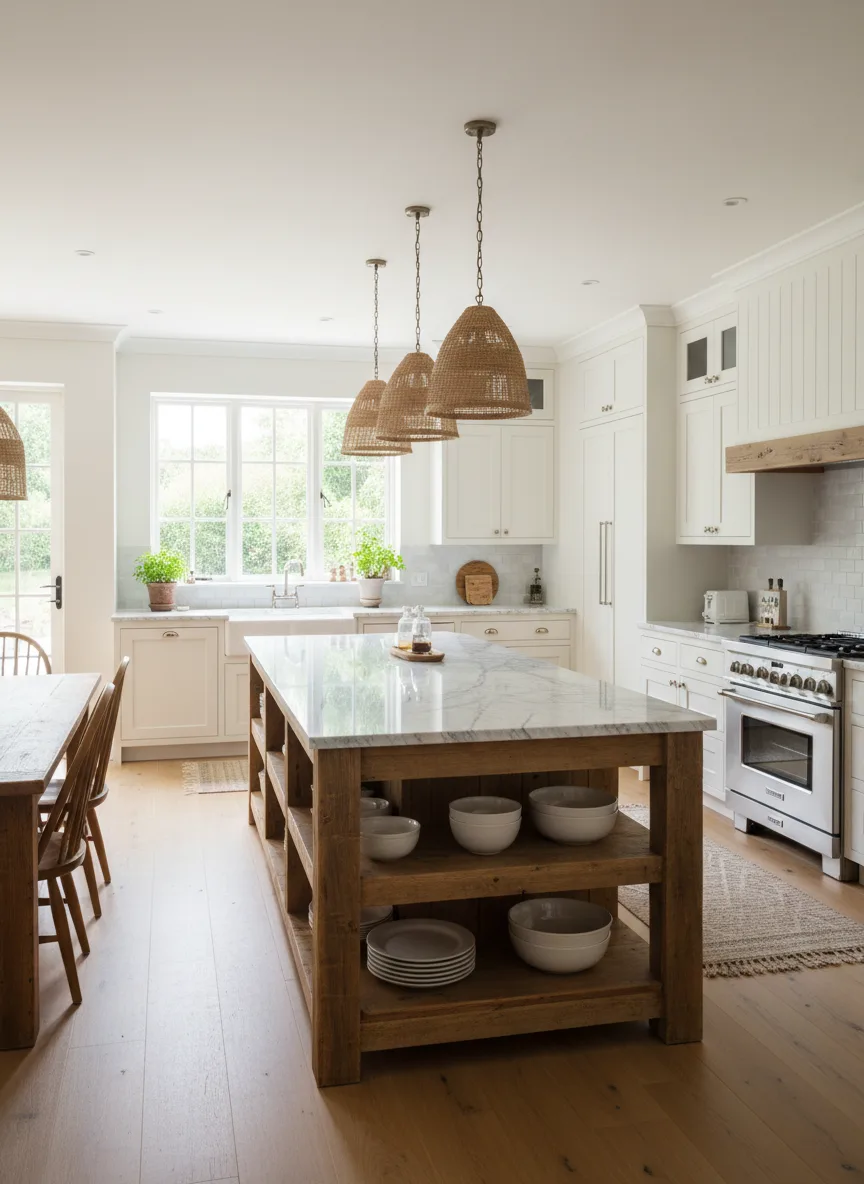
The two styles get confused because both love white walls, open shelves and rustic wood. The difference is temperature and pattern. A farmhouse kitchen stays cooler and more muted, built on shiplap, an apron sink and grey-green painted cabinets, while Mediterranean turns the heat up with terracotta floors, saturated glazed tile and iron or brass instead of brushed nickel. If your kitchen already has warm light and you want color, go Mediterranean. If it is north-facing and you want calm, farmhouse is the safer read.
The common mistake is tiling everything. One patterned splash behind the range, or one tiled niche, carries the whole style; patterned tile on every wall plus a patterned floor tips the room into a restaurant. The second mistake is glossy modern cabinet doors under rustic tile, which fight each other. Keep the doors matte and simple, let the tile and the plaster do the talking, and the room holds together even in a small galley.
How to get the Mediterranean look in your kitchen
- Warm the floor first. Terracotta or a terracotta-look porcelain sets the sun-baked base that every other Mediterranean choice depends on.
- Concentrate the tile. Put hand-painted or zellige-style tile behind the range only, in cobalt, sea green or ochre, and leave the rest of the walls plastered white.
- Swap the hood and the hardware. A plastered stucco-look hood plus aged brass or black iron pulls does more for the style than new cabinets.
- Open a few shelves. Replace one run of upper cabinets with wood shelves holding glazed ceramics, olive oil and a plant, and keep the rest closed for storage.
- See it on your real kitchen first. Upload a photo to restylai and apply the Mediterranean style to your actual kitchen, with its real walls and layout kept intact, before you buy a single tile.
See your kitchen in Mediterranean, free
Upload one photo and watch your real kitchen in Mediterranean. Your walls, windows and layout stay exactly as they are.
Try it free, no signupOne photo. About ten seconds. Your room, your layout.