Japandi · Home Office
Japandi Home Office Ideas
Japandi crosses Japanese restraint with Scandinavian warmth, and a home office is where the mix earns its keep: a calm, low, uncluttered space that makes focus feel easy. The look runs on light oak and walnut, oat and clay tones, paper and linen textures, and a lot of deliberate empty space. Here is what actually defines it, and how to preview it on a photo of your own office before you move a single piece of furniture.
What makes a home office Japandi
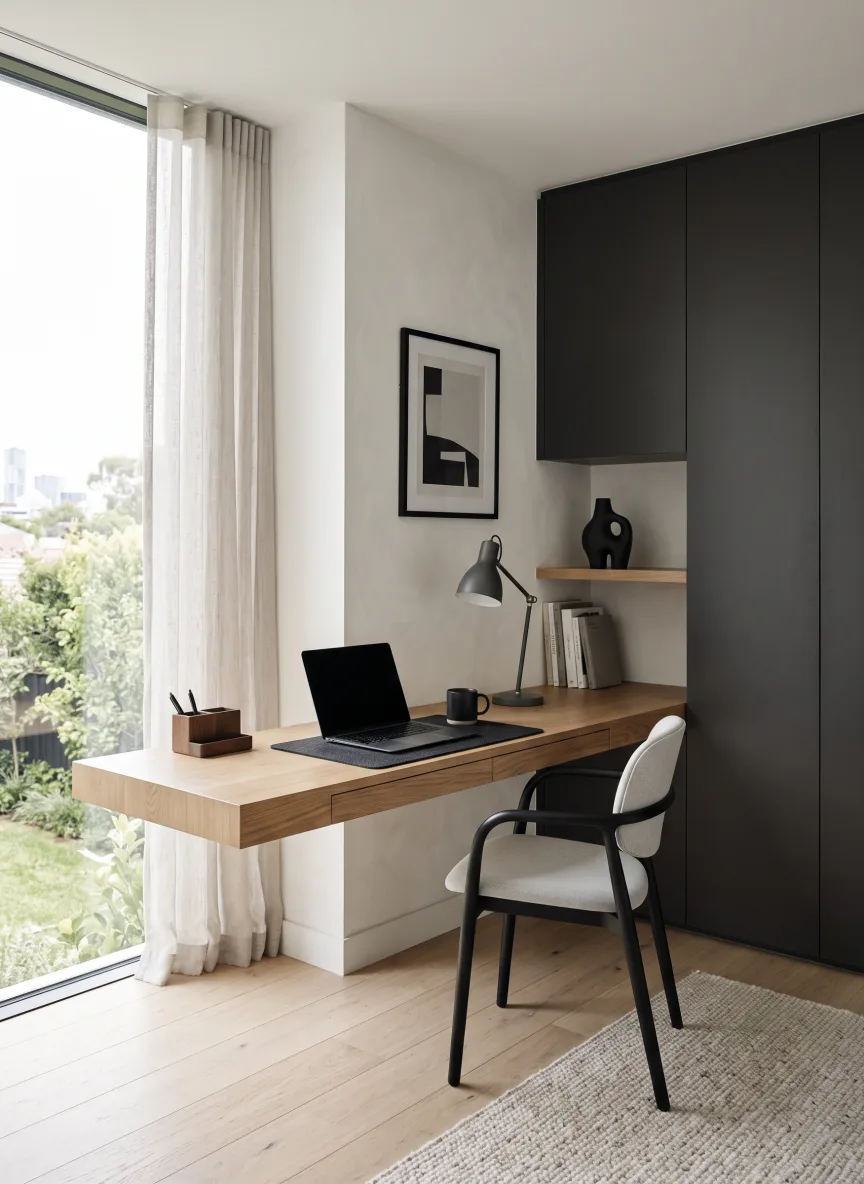
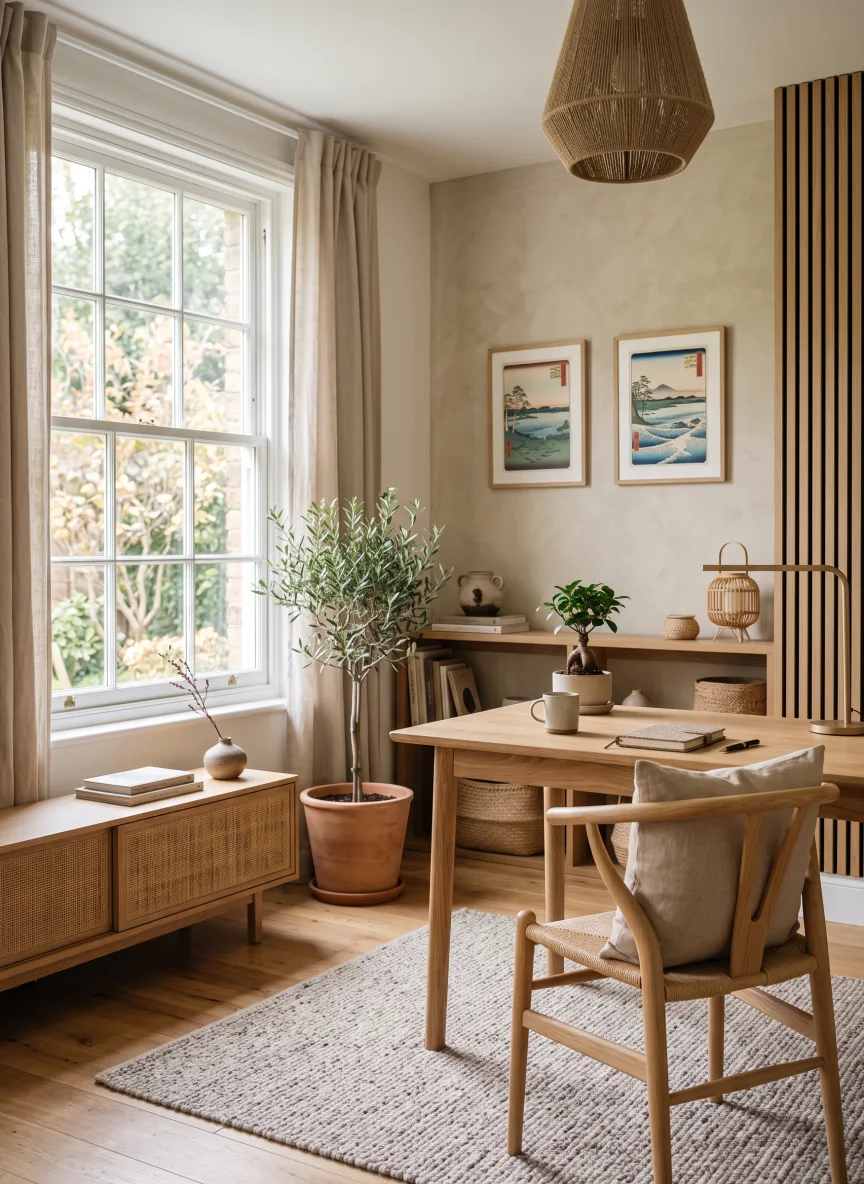
Start with the palette: warm off-white or clay-toned walls, then two wood tones working together, a pale oak or ash for the desk and shelving with a darker walnut or smoked oak accent in a chair frame or a low cabinet. That two-tone wood pairing is the signature move. The desk sits lower and longer than a typical office desk, with a thick solid top, square or gently tapered legs, and no metal hardware on show. Storage runs closed and horizontal, a low sideboard rather than tall bookcases, so the upper walls stay almost bare.
Lighting and texture carry the atmosphere. A paper or linen pendant, or a sculptural ceramic table lamp, gives soft diffuse light instead of a hard task lamp glare. Then one rough element goes in against all that smoothness: a stoneware vase, a single dried branch, a flat-weave wool or jute rug in oat. The second signature move is negative space. One wall stays empty on purpose, and the few objects that remain, a ceramic pen cup, a small ink print, are placed with air around them like a display.
Japandi versus minimalist, and where offices go wrong
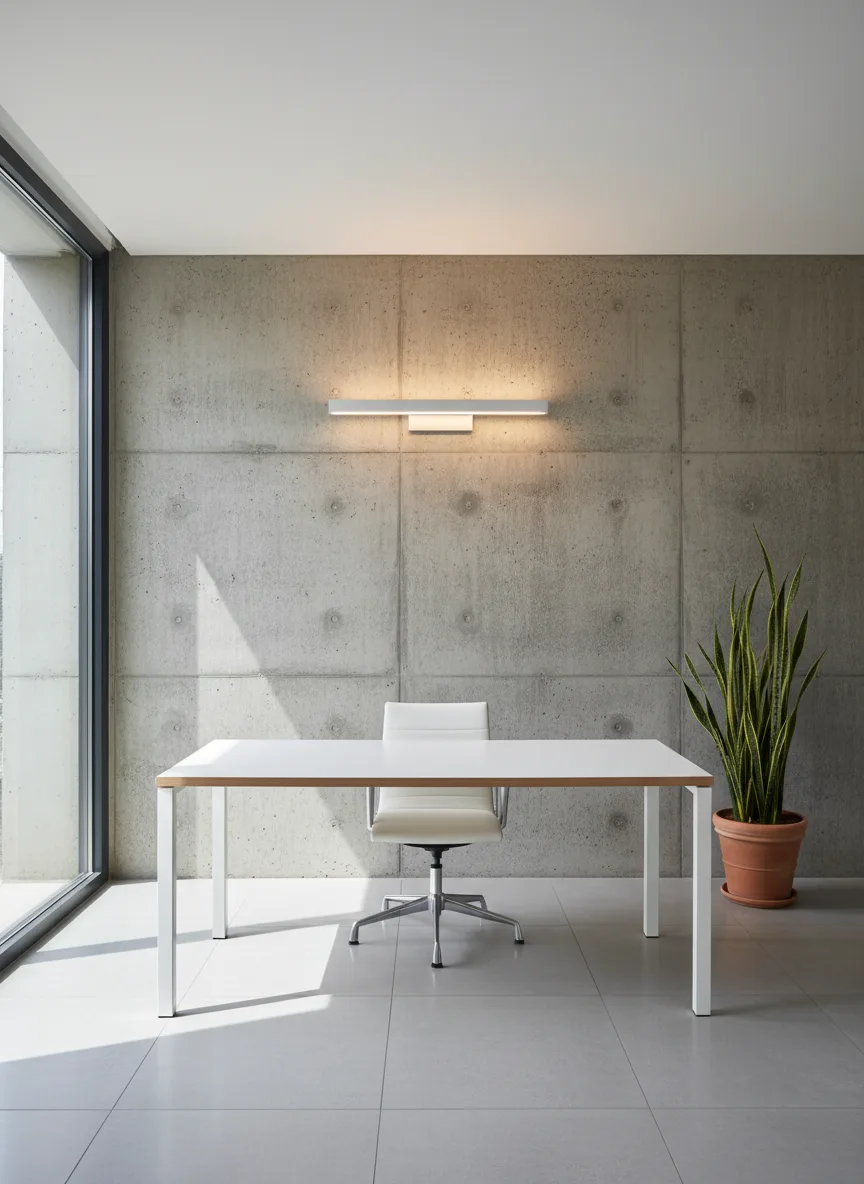
People aim for Japandi and often land on plain minimalism instead. A minimalist home office shares the bare surfaces but runs cooler and flatter: whiter walls, less wood, fewer textures, more of an architectural exercise. Japandi keeps the same discipline and adds craft. Visible grain, handmade ceramics, woven fiber and a warmer wall color are what separate the two, so if your pared-back office feels sterile rather than serene, it is usually the texture layer that is missing, not the tidying.
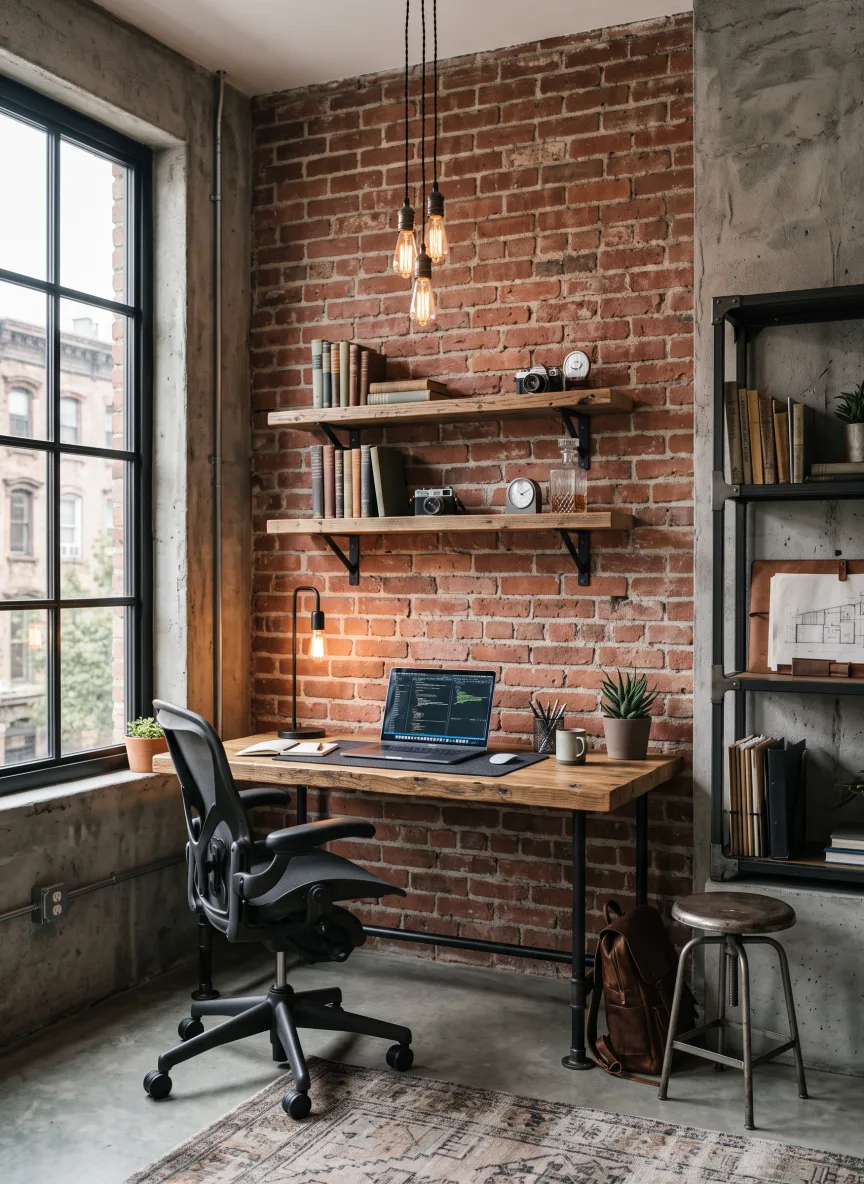
The most common mistakes are practical ones. Cable clutter kills the look faster than anything, since a Japandi desk has nowhere to hide a nest of chargers, so cables need to route down one leg or into a tray under the top. Black mesh office chairs fight the palette; a wood-framed chair with an oat or charcoal fabric seat holds the style without wrecking your back. And resist filling the shelves. The style depends on empty space reading as intentional, which means owning fewer visible objects, not arranging more of them neatly.
How to get the Japandi look in your home office
- Warm the walls first. Swap bright white for a warm off-white or soft clay tone so the wood reads golden instead of yellow against it.
- Pair two wood tones. A pale oak desk with one darker walnut piece, a chair or a low cabinet, is the fastest way to read as Japandi rather than Scandi.
- Go low and closed with storage. A long sideboard under the window beats tall shelving, and it keeps the upper walls bare where the calm lives.
- Light it softly, hide the cables. A paper or linen shade diffuses the light, and routing cables down one desk leg protects the clean surfaces that carry the whole style.
- Try it on your actual office. Upload one photo to restylai and apply Japandi to your real room, with your real walls and window, before you commit to a single purchase.
See your home office in Japandi, free
Upload one photo and watch your real home office in Japandi. Your walls, windows and layout stay exactly as they are.
Try it free, no signupOne photo. About ten seconds. Your room, your layout.