Industrial · Home Office
Industrial Home Office Ideas
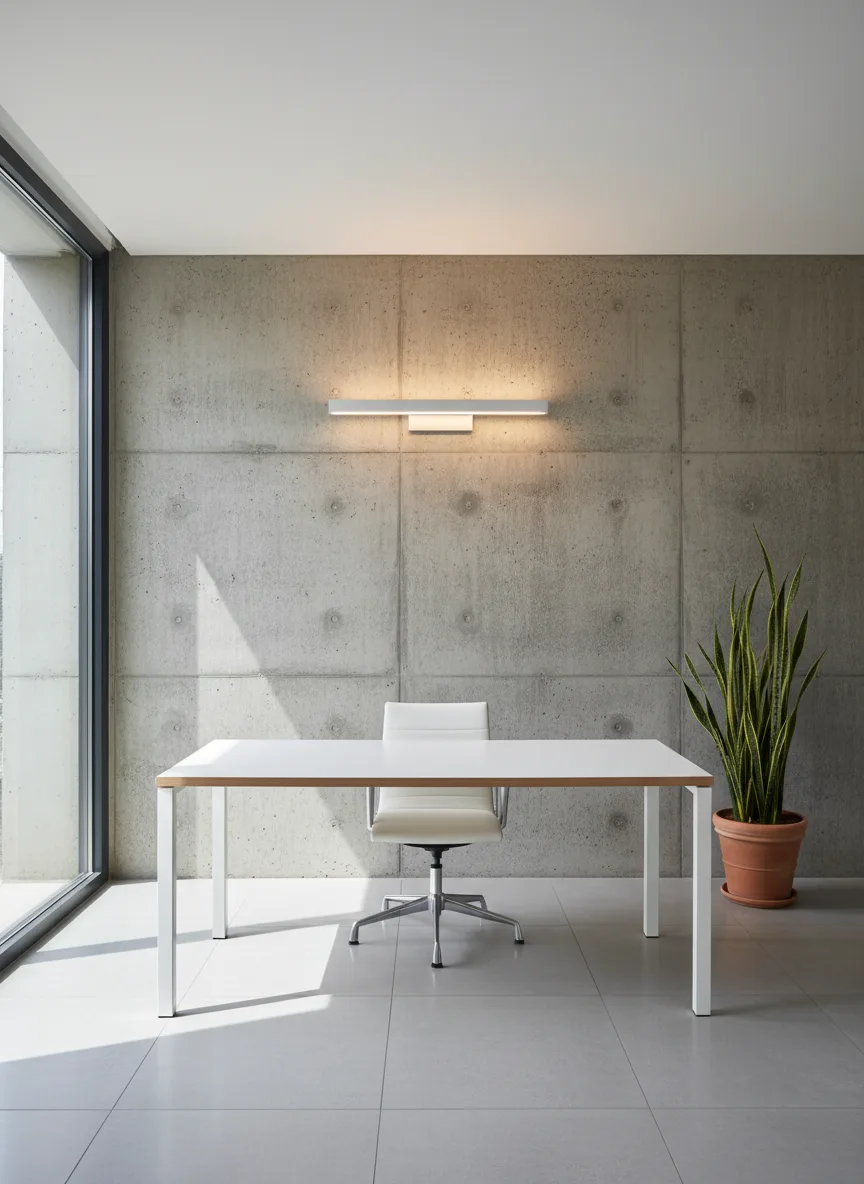
An industrial home office borrows the bones of a converted warehouse: exposed brick, raw concrete, blackened steel and worn leather, all left honest instead of polished over. It is a workspace that looks built rather than decorated, which suits a room where you actually get things done. Here is what defines the style, and how to preview it on a photo of your own office before you commit to a single fixture.
What makes a home office industrial
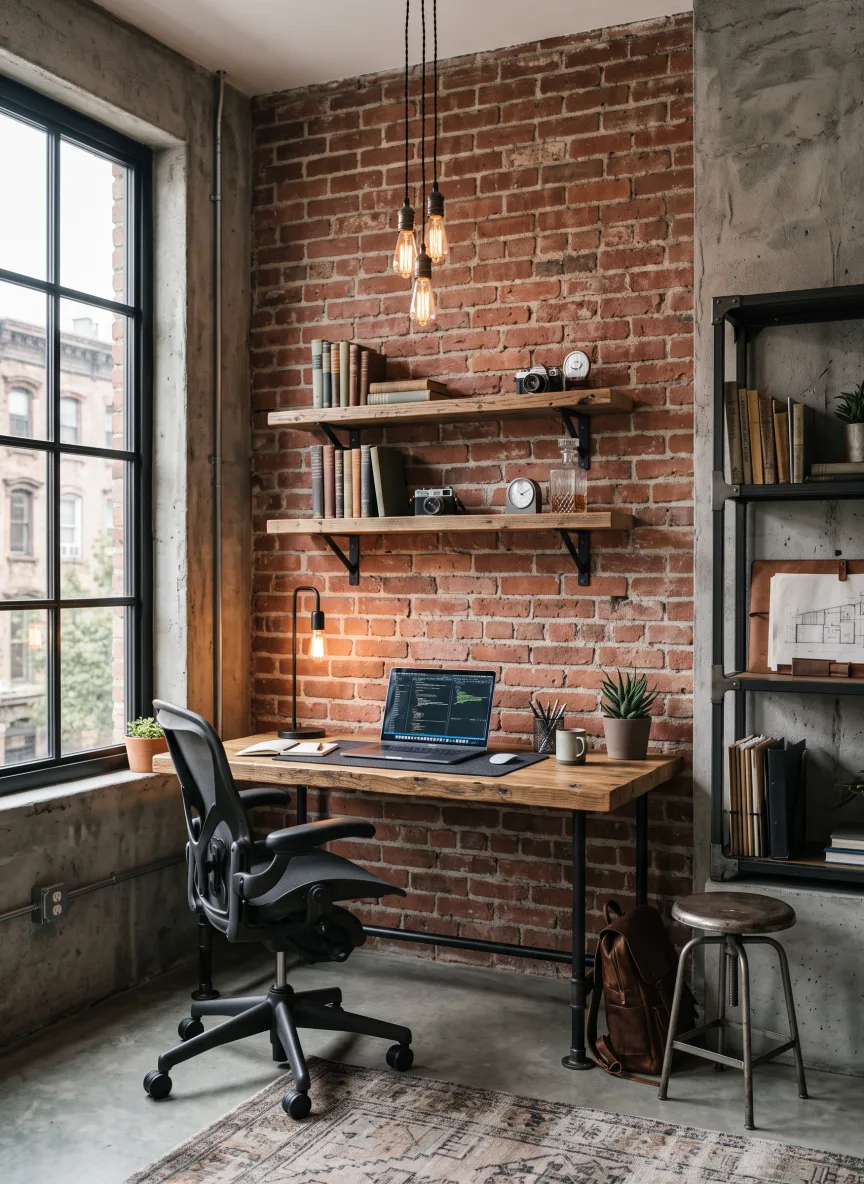
The palette runs charcoal, rust, tan and grey, anchored by one raw wall surface: exposed brick, board-formed concrete, or a deep near-black paint if the architecture gives you neither. The desk is the signature piece, a thick slab of reclaimed or live-edge wood on a black steel frame, with visible bolts and welds treated as detail rather than something to hide. Shelving follows the same logic: open steel-pipe or angle-iron brackets carrying chunky timber boards, so books and storage boxes read as part of the texture.
Lighting does the heavy lifting. Skip the ceiling flush mount and hang a caged pendant or an enamel factory shade low over the desk, then add an articulated task lamp in aged brass or matte black. Metal-framed windows, or black window trim that fakes them, sharpen the whole room. The one or two moves that sell the look are the raw wall and the steel-and-timber desk; a tan leather chair with some patina finishes it without softening it too much.
Where people get industrial wrong
The most common mistake is buying the theme instead of the materials: gear-shaped clocks, faux Edison bulb clusters and stencilled "factory" signs turn the room into a costume. Real industrial restraint means fewer, heavier pieces in genuine steel, wood and leather, and letting scuffs and mill marks stay visible. The second mistake is going all dark in a small office. Keep the ceiling and at least two walls pale, concentrate the brick or charcoal on the wall behind your monitor, and the room stays workable instead of cave-like.
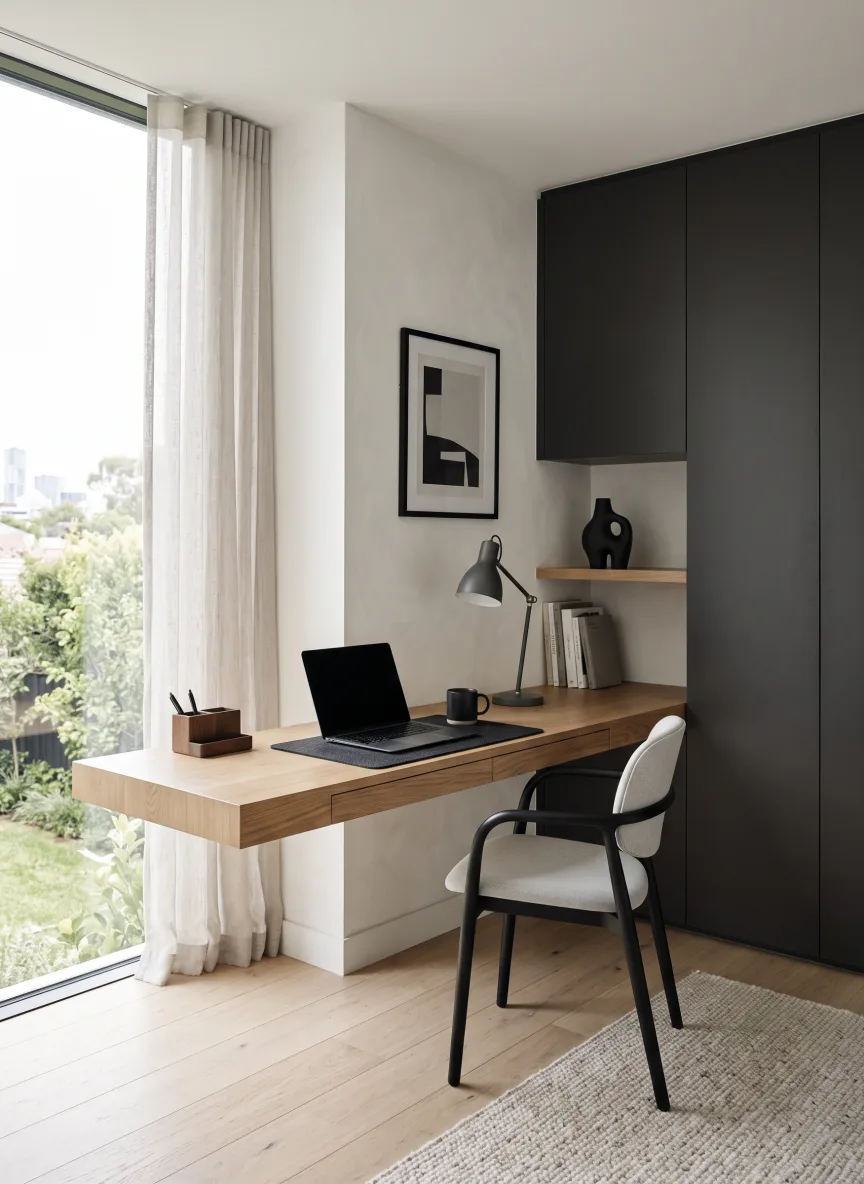
It also helps to know what you are choosing against. Industrial and modern share clean lines and an honest use of materials, but a modern home office hides its structure behind smooth finishes where industrial celebrates it, rivets, pipe and grain included. If you keep gravitating to the lighter, sleeker versions of the mood boards, you may want modern with one industrial accent rather than the full raw-wall treatment.
How to get the Industrial look in your home office
- Commit to one raw wall. Exposed brick, concrete, or a matte charcoal paint behind the desk gives the whole room its backbone; keep the other walls quiet.
- Pick a steel-and-timber desk. A thick wood top on a black metal frame is the defining piece, and visible bolts or welds are a feature, not a flaw.
- Light it like a workshop. A low-hung factory pendant or caged shade over the desk plus a black articulated task lamp beats any ceiling flush mount.
- Skip the factory props. No gear clocks or stencilled signs; let leather, steel and worn wood carry the character on their own.
- Test it on your real office first. Upload a photo to restylai and apply the industrial style to your actual room, with your walls and windows kept exactly where they are, before you buy a single piece.
See your home office in Industrial, free
Upload one photo and watch your real home office in Industrial. Your walls, windows and layout stay exactly as they are.
Try it free, no signupOne photo. About ten seconds. Your room, your layout.