Wabi-Sabi · Bedroom
Wabi-Sabi Bedroom Ideas
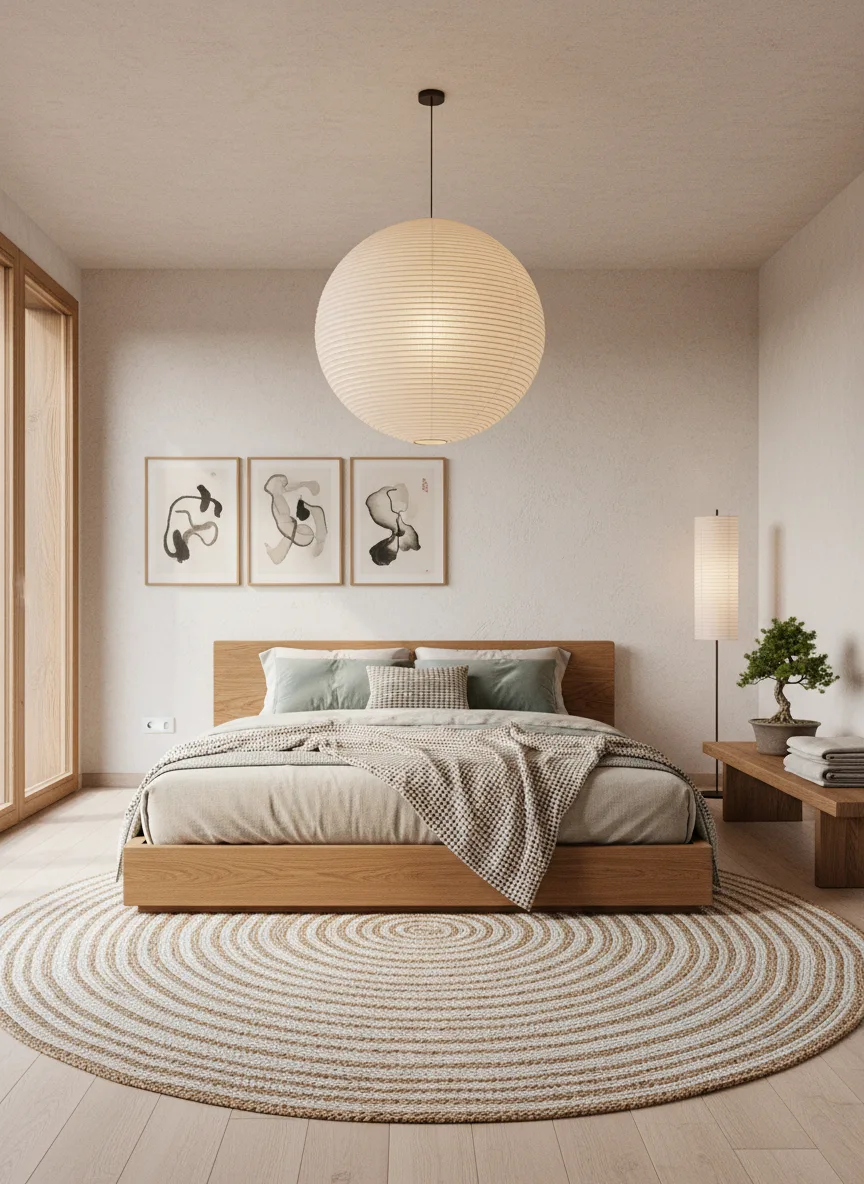
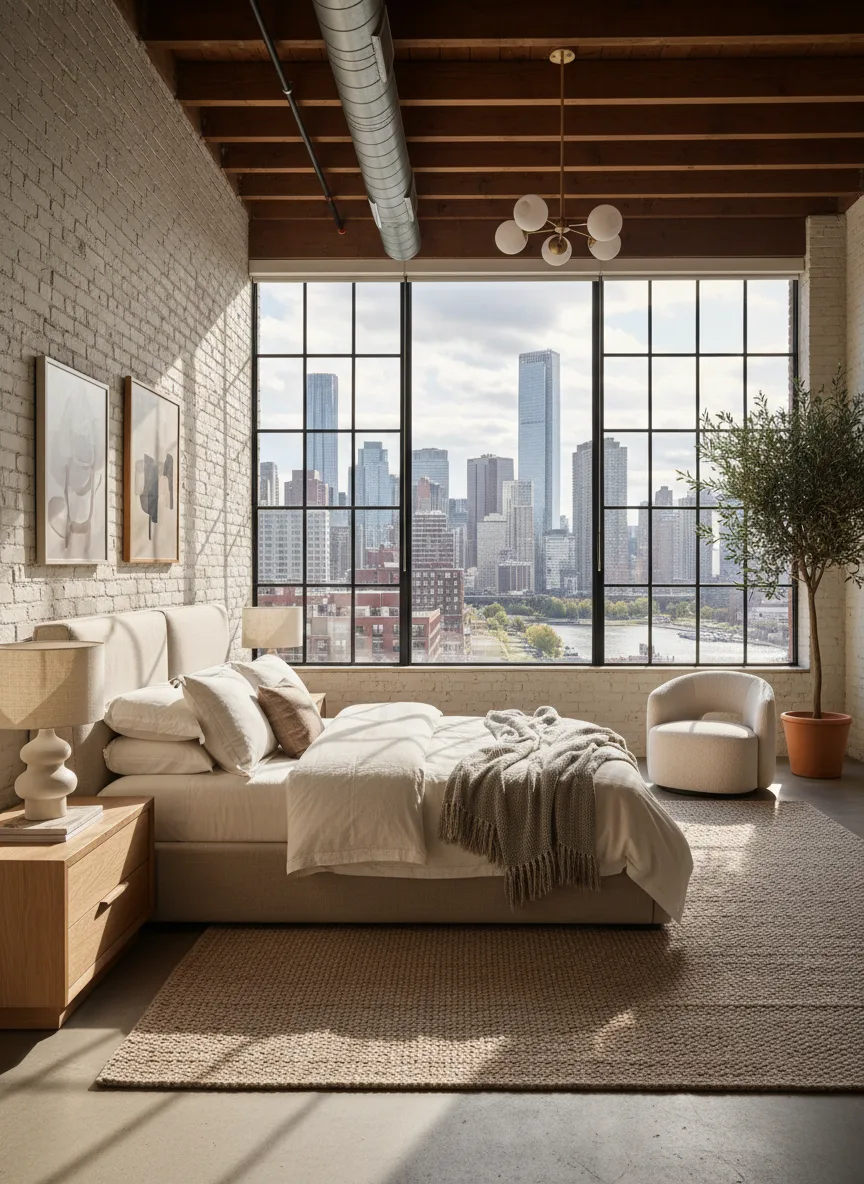
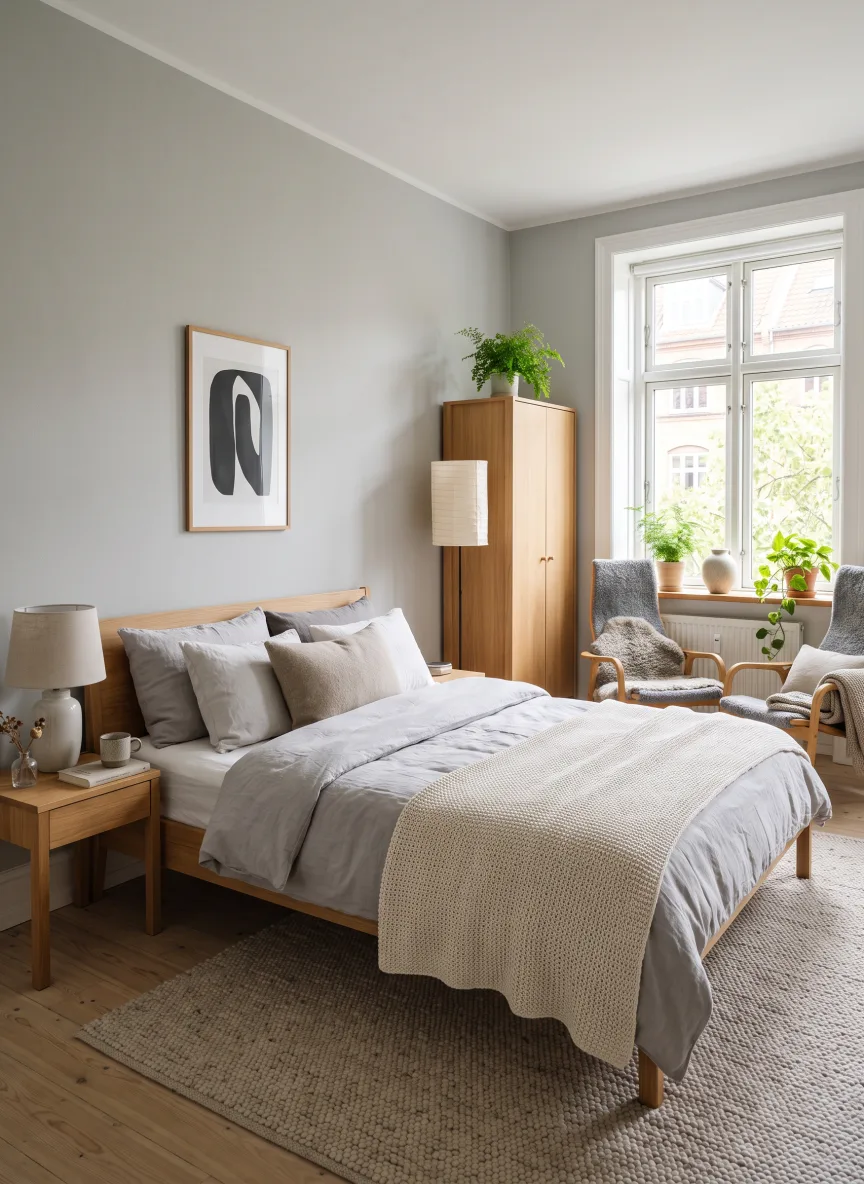
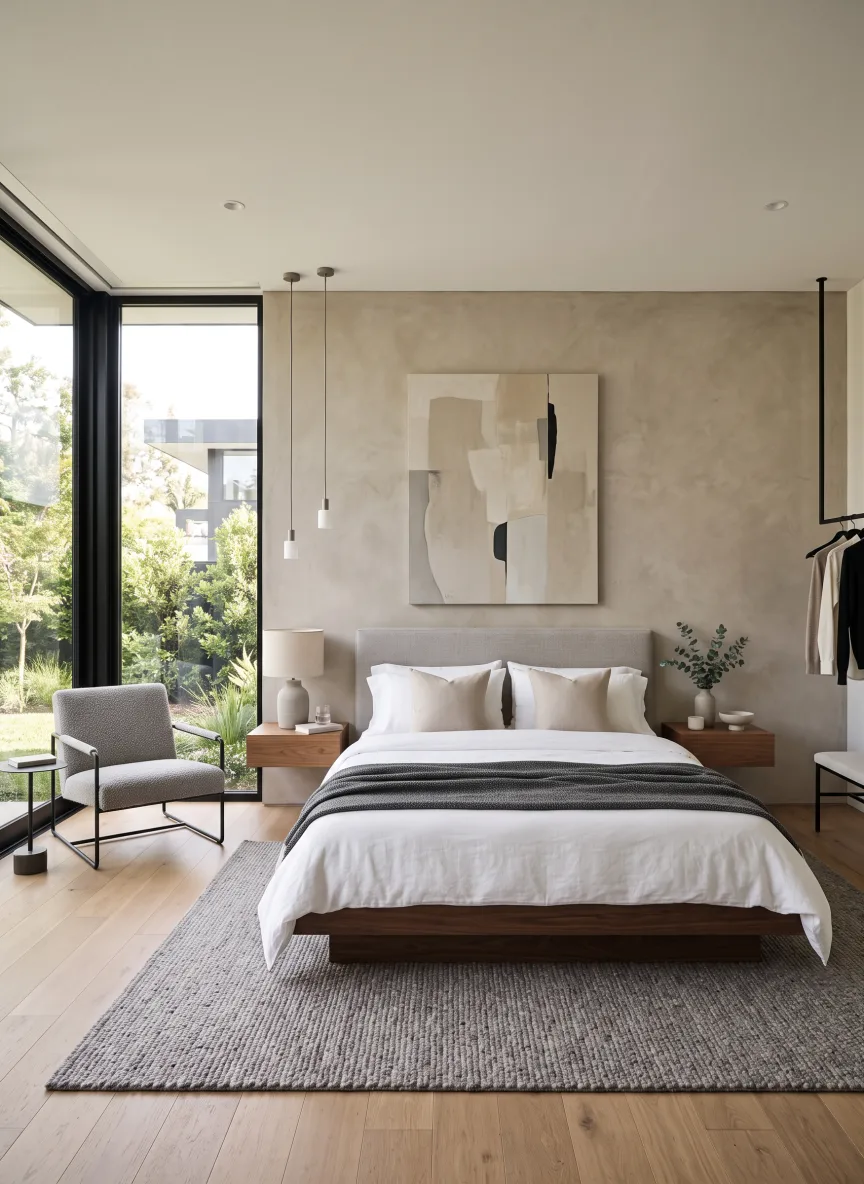
Wabi-Sabi is the Japanese idea that worn, imperfect and unfinished things are the beautiful ones, and in a bedroom it translates to clay-toned walls, raw linen, aged wood and almost nothing shiny. The room feels quiet, handmade and slightly weathered, like it has been lived in gently for decades. Here is what actually builds the look, and how to preview it on a photo of your own bedroom before you commit to anything.
What makes a bedroom Wabi-Sabi
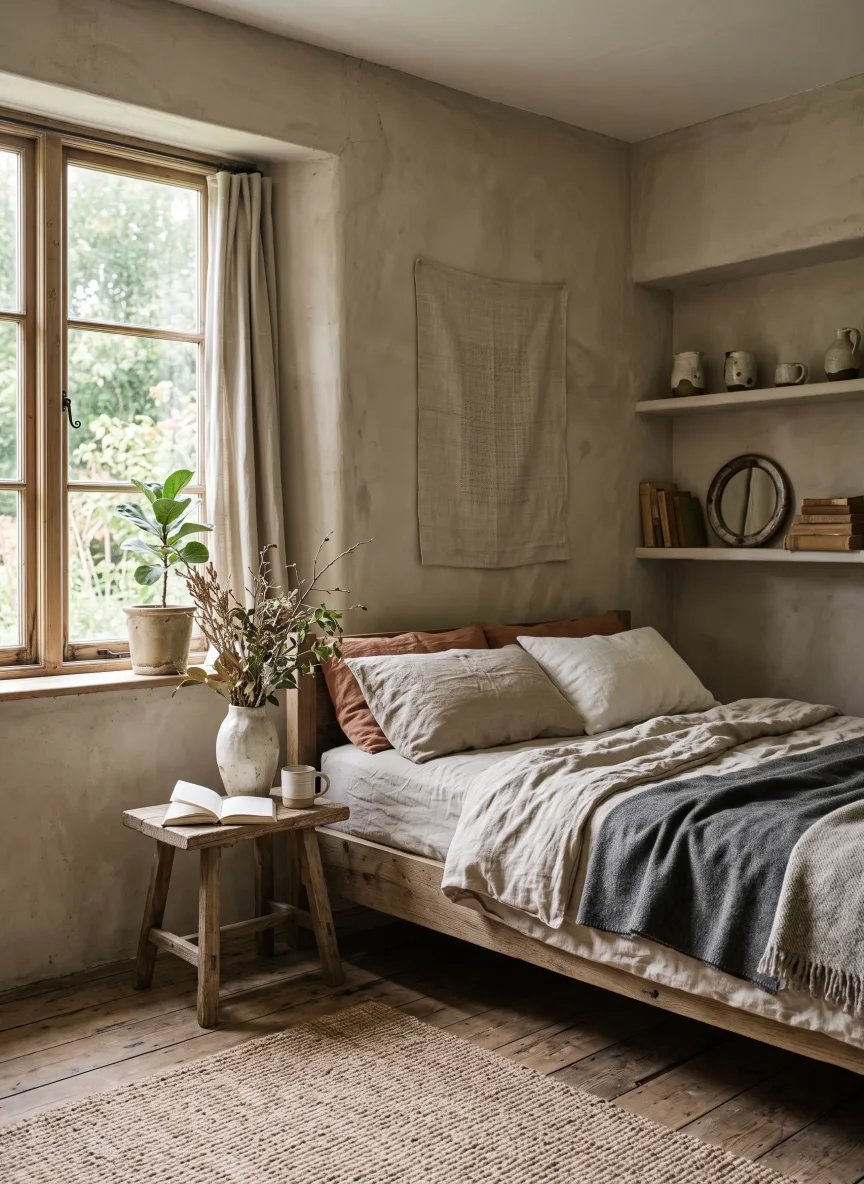
The palette comes from earth, not a paint chart: bone, clay, mushroom, warm grey and the occasional near-black accent. Walls are the signature move, ideally limewash or a rough plaster finish so the surface catches light unevenly instead of sitting flat. The bed stays low, often a simple timber platform or even a mattress on a low base, dressed in crumpled stonewashed linen that is never ironed and never tucked tight. Wood shows its grain, knots and cracks; a live-edge bench or a stool cut from a single trunk does more for the style than any matched furniture set.
Objects are few and each one carries some evidence of the hand that made it. A single unglazed ceramic vessel on a stool, a dried branch instead of a flower arrangement, a paper or linen pendant lamp that throws soft, uneven light. Nothing is symmetrical and nothing is new-looking: a chipped bowl or a faded rug is a feature, not a flaw. The discipline is leaving visible emptiness around each piece so the texture of the walls and textiles can do the talking.
Wabi-Sabi versus Japandi, and where people go wrong
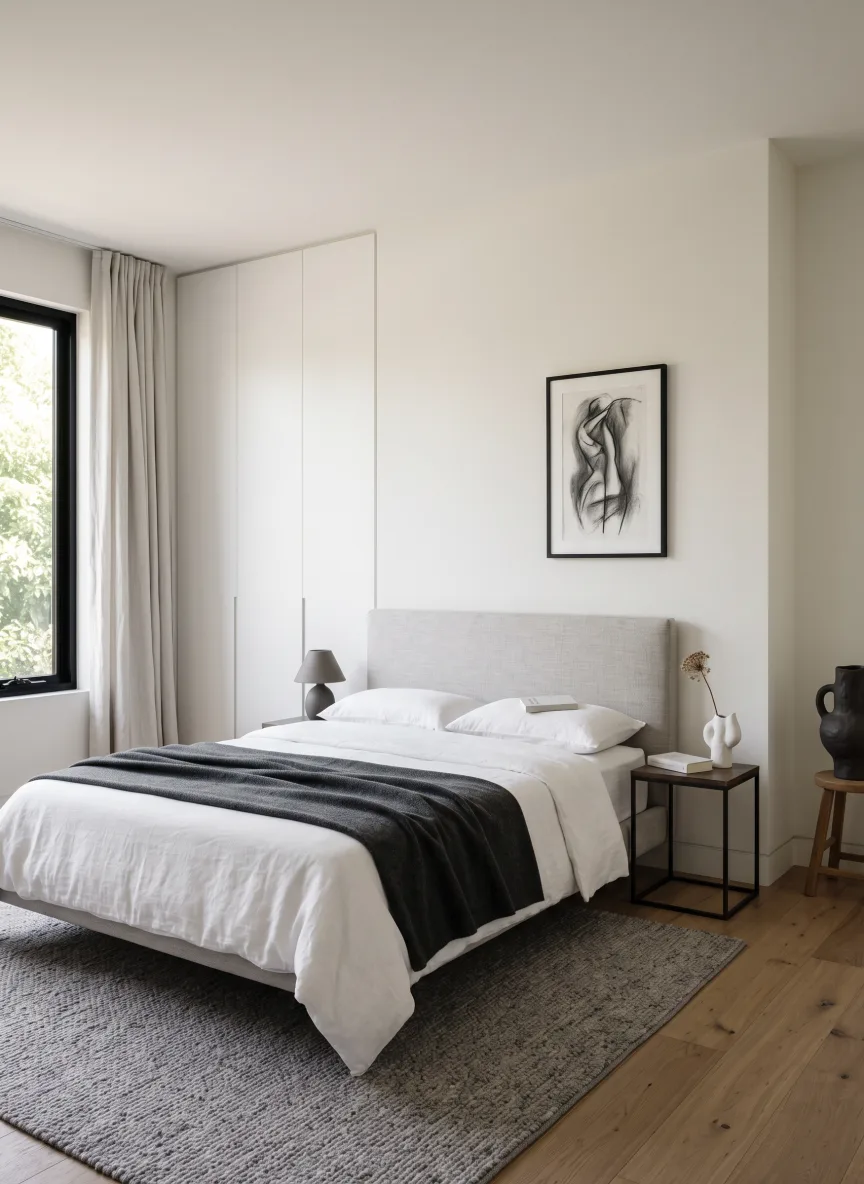
The styles get confused because both are calm, low and Japanese-influenced. The difference is polish. A japandi bedroom borrows Scandinavian cleanliness, so its lines stay crisp, its wood is smoothly finished and its palette is tidier. Wabi-Sabi deliberately keeps the roughness Japandi sands away: uneven plaster, frayed linen edges, asymmetry, patina. If your instinct is to straighten the duvet, you are drifting toward Japandi. If you like the bed slightly rumpled, you are in Wabi-Sabi territory.
The most common mistake is buying distressed-look furniture from a catalogue, which reads as staged rather than aged. One genuinely old or handmade piece beats five factory-weathered ones. The second mistake is clutter in earth tones; brown objects everywhere is not Wabi-Sabi, restraint is. And skip pure white paint. Bright white makes every rough texture look dirty instead of warm, so keep the walls in the bone-to-clay range and let daylight and one soft lamp do the rest.
How to get the Wabi-Sabi look in your bedroom
- Rough up the walls. Limewash or textured plaster in bone or clay gives the uneven, light-catching surface the whole style depends on.
- Drop the bed low. A simple timber platform dressed in stonewashed linen, left crumpled rather than tucked, is the centerpiece of the room.
- Choose one imperfect object per surface. An unglazed ceramic vessel, a dried branch or a chipped bowl, with real empty space around it.
- Favor aged over distressed. One genuinely old or handmade wooden piece carries the room better than a set of factory-weathered furniture.
- Try it on your actual bedroom first. Upload a photo to restylai and apply the Wabi-Sabi style to see how the clay tones and raw textures sit in your real light, free, before you touch a paintbrush.
See your bedroom in Wabi-Sabi, free
Upload one photo and watch your real bedroom in Wabi-Sabi. Your walls, windows and layout stay exactly as they are.
Try it free, no signupOne photo. About ten seconds. Your room, your layout.