Traditional · Bathroom
Traditional Bathroom Ideas
A Traditional bathroom is built around symmetry, warm classic materials and fixtures with real detail: a pedestal or furniture-style vanity, polished nickel or brass, marble or beadboard, and framed mirrors instead of frameless glass. It is the look that reads settled and permanent, like the bathroom has always belonged to the house. Here is what actually defines it, and how to preview it on a photo of your own bathroom before you commit to anything.
What makes a bathroom Traditional
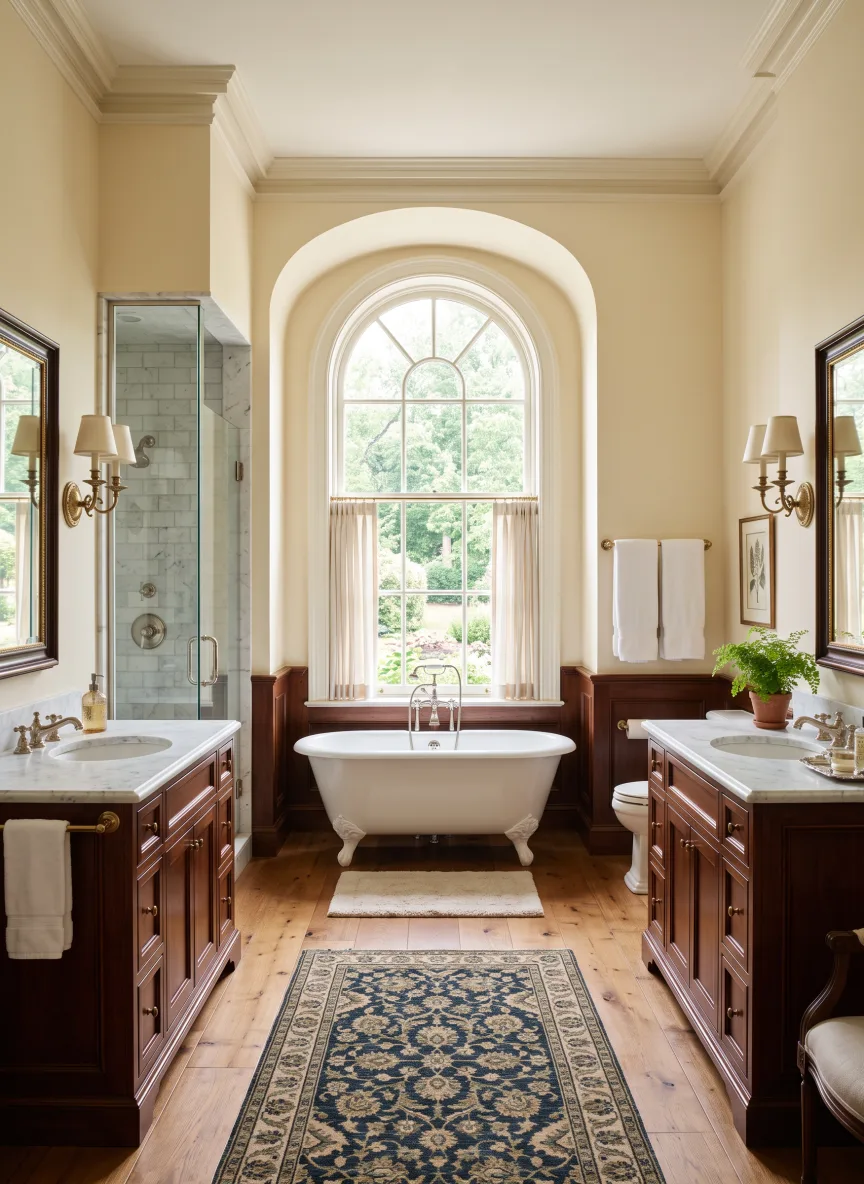
Start with the fixtures, because they carry the style. A furniture-style vanity with raised panel doors and turned feet, a pedestal sink, or a clawfoot or skirted tub instantly signals Traditional in a way paint never can. Taps are cross-handled or lever-handled in polished nickel, chrome or aged brass, and the mirror is framed in wood or metal, often arched or beveled. Sconces flank the mirror at eye level, usually with small fabric or glass shades, rather than a single bar light above it.
The materials are classic and slightly formal. Marble or marble-look stone on counters, a basketweave, hex or subway tile floor, and wainscoting or beadboard on the lower wall with paint above, typically in soft white, cream, sage or muted blue. The two signature moves are symmetry and trim: matched sconces and matched storage either side of a centered sink, and real molding around the mirror, the wainscot cap and the door casings. Get those two right and even ordinary fixtures start to read Traditional.
Where people go wrong, and the modern comparison
The most common mistake is mixing eras at the hardware level. A vessel sink, a matte black waterfall tap or a frameless LED mirror will fight every panel door and marble edge in the room, because Traditional depends on all the details agreeing. The second mistake is over-ornamenting: one clawfoot tub or one marble top is a statement, but ornate tile, ornate vanity, ornate lighting and gilt accessories together tip the room into pastiche. Pick one hero piece and keep the rest quiet and matched.
If you are torn, the useful contrast is with a modern bathroom, which strips out exactly what Traditional celebrates: no molding, no panel doors, floating vanities, frameless glass and hidden handles. Modern feels sleek and current but dates faster as trends turn over, while Traditional trades that edge for a room that still looks correct in twenty years. Seeing both applied to the same photo of your actual bathroom settles the argument faster than any mood board.
How to get the Traditional look in your bathroom
- Anchor the room with one classic fixture. A furniture-style vanity with panel doors, a pedestal sink or a clawfoot tub does more for the style than any accessory can.
- Match your metals and keep them warm or polished. Cross-handled taps, cabinet pulls and sconces in polished nickel or aged brass, never mixed with matte black.
- Add trim before you add decor. Beadboard or wainscoting to chair height, a framed mirror and proper door casings give the walls the detail Traditional needs.
- Build in symmetry. Center the sink, flank the mirror with a matched pair of sconces, and balance storage on both sides so the room reads composed.
- Try it on your real bathroom first. Upload a photo to restylai and apply the Traditional style to your own walls and layout, the first design is free and takes seconds.
See your bathroom in Traditional, free
Upload one photo and watch your real bathroom in Traditional. Your walls, windows and layout stay exactly as they are.
Try it free, no signupOne photo. About ten seconds. Your room, your layout.